|
You are receiving this email because you signed up for the monthly ASI Newsletter.
If you no longer wish to receive these emails you can unsubscribe here.
|
|
|
 |
|
February 2026 - Snakes and dry bites
|
|
|
|
Snake venom developed millions of years ago, long before the appearance of primitive humans or Homo sapiens. Its primary purpose was never defence against people, but rather to immobilise and secure prey. While venom can be used defensively, this is a secondary function and is most noticeable in venoms that cause pain, such as cytotoxins.
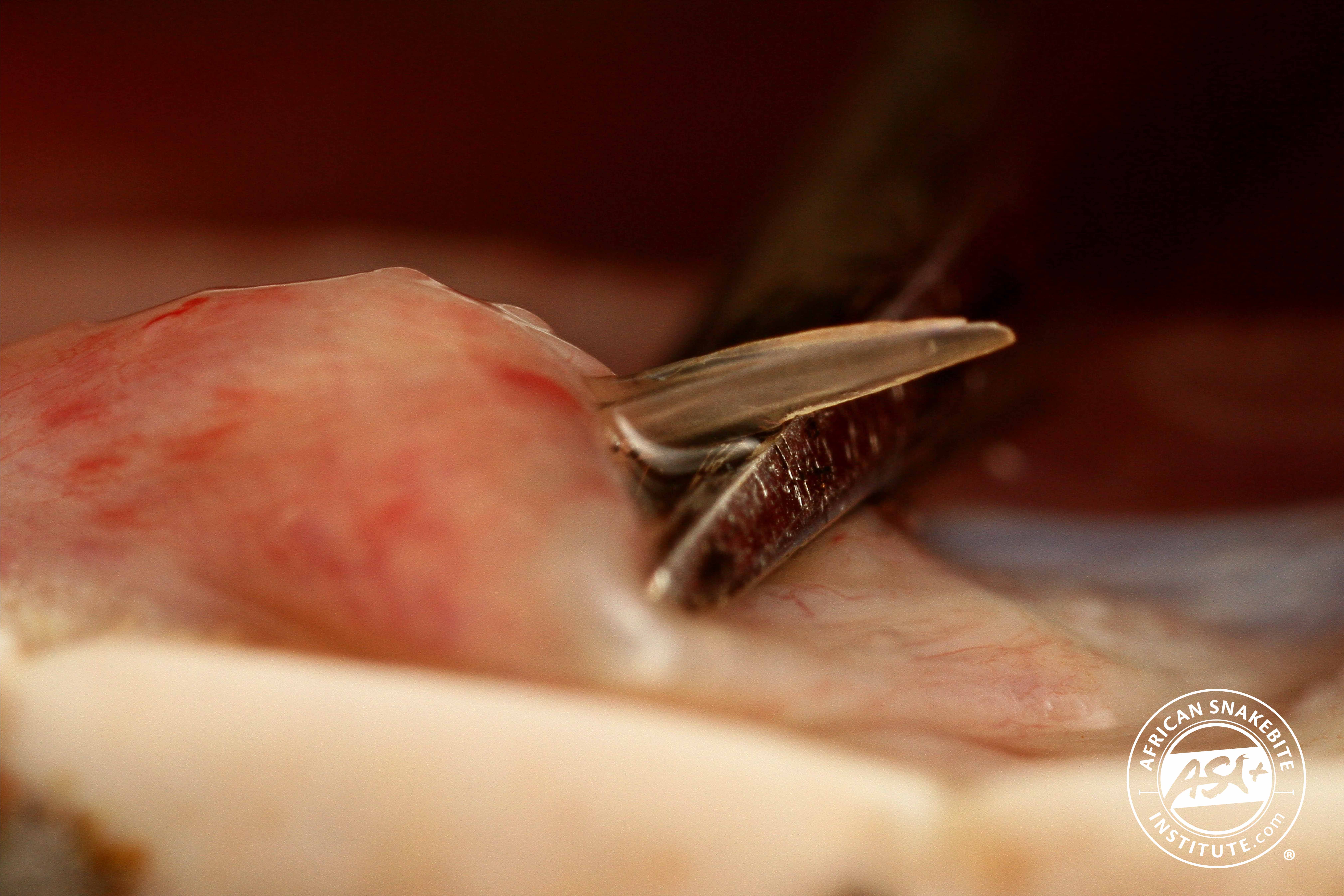
The first snakes to develop venom were the colubrid snakes, often referred to as back-fanged snakes. African examples include the Boomslang and vine snakes. These early venomous snakes produced a relatively simple protein toxin in their saliva, which gradually evolved into more complex venom systems. Their venom delivery is considered primitive: enlarged teeth at the back of the upper jaw have a groove along the front, allowing venom to slowly trickle into the wound during a prolonged bite.
|
|
|
 |
|
Grooved back fangs of a Boomslang. Photo Luke Kemp
|
|
|
|
Venom is produced and stored in venom glands situated on either side of the upper jaw, just behind and below the eyes — not in the body, mouth, or fangs themselves. Venom production is similar to the way saliva is produced in humans and is an ongoing process. Snakes never completely run out of venom. Even after being milked, a Black Mamba, for example, will still retain sufficient venom to deliver a fatal bite.
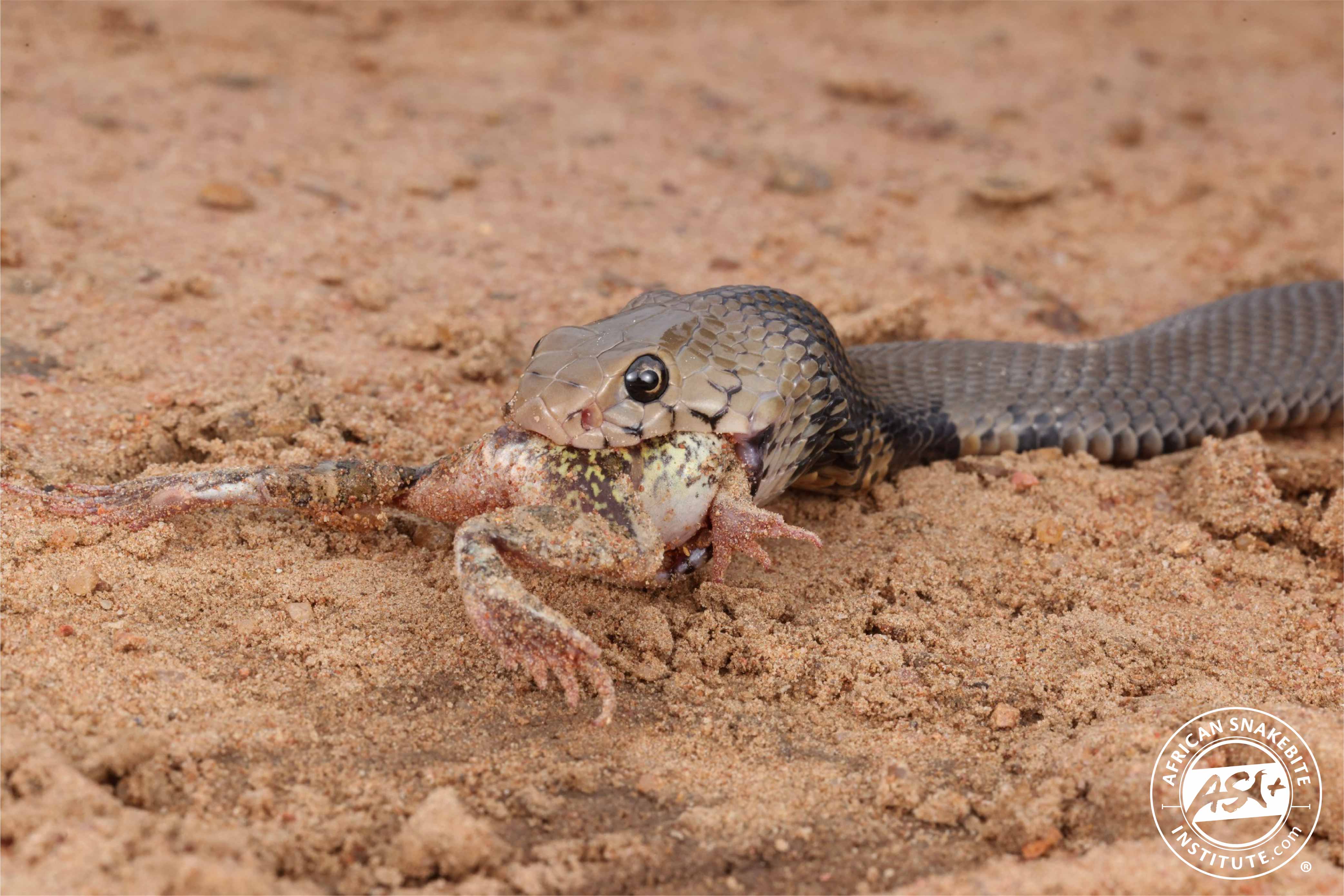
Snake venom is a complex mixture of proteins and peptides, and in many cases it is highly prey-specific. The venom of a Black-headed Centipede-eater has little to no effect on humans, yet it is lethal to centipedes. Venom complexity increases further when considering diet changes. Juvenile snakes often feed on frogs and lizards, particularly geckos, and their venom is well-suited to this prey. As some species mature, their diet may shift to rodents and toads, and their venom adapts accordingly. Even within a single species, venom composition may vary between individual snakes.
|
|
|
 |
|
A young Mozambique Spitting Cobra (Naja mossambica) feeding on a small Sand Frog.
Photo Luke Kemp.
|
|
|
|
|
|
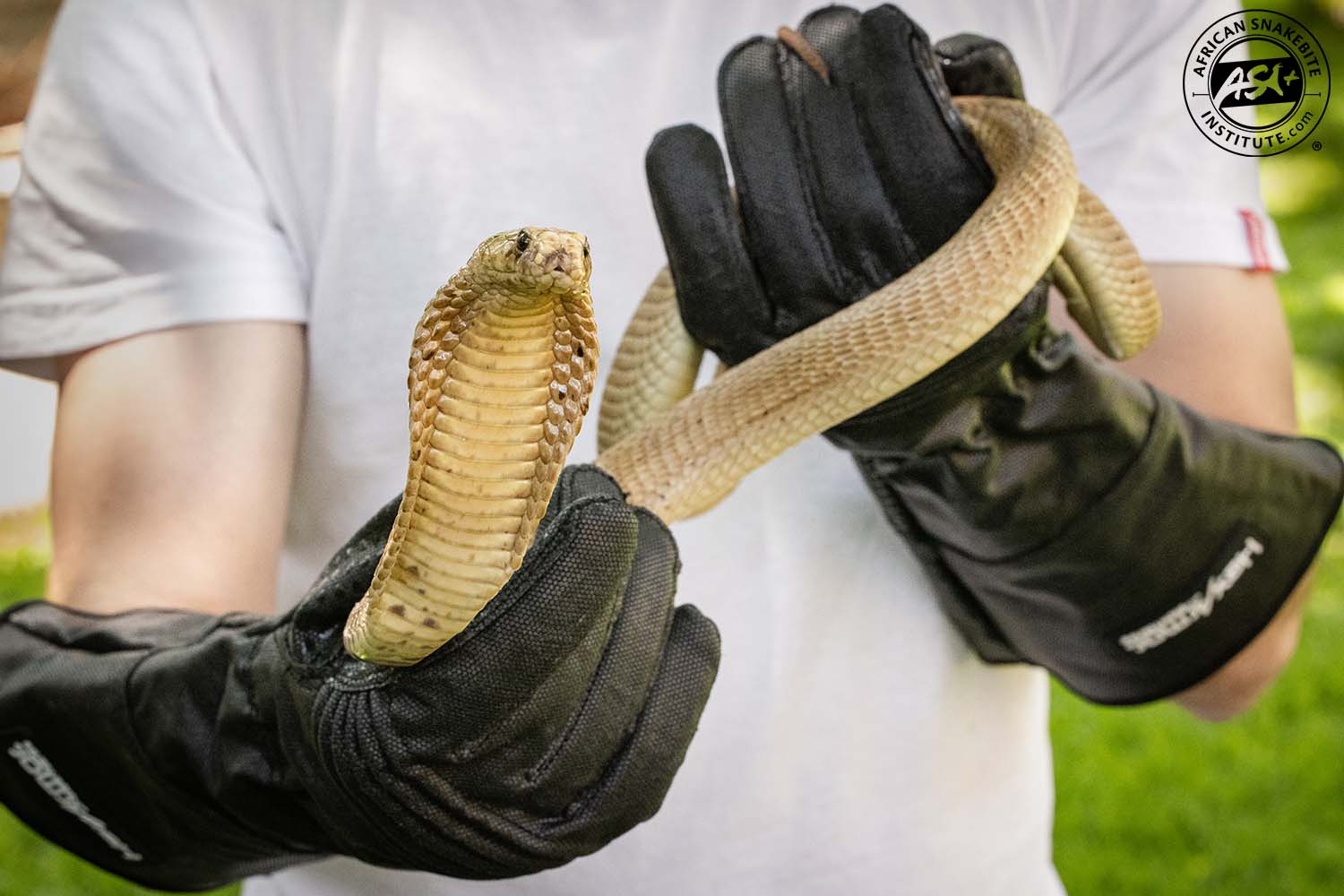
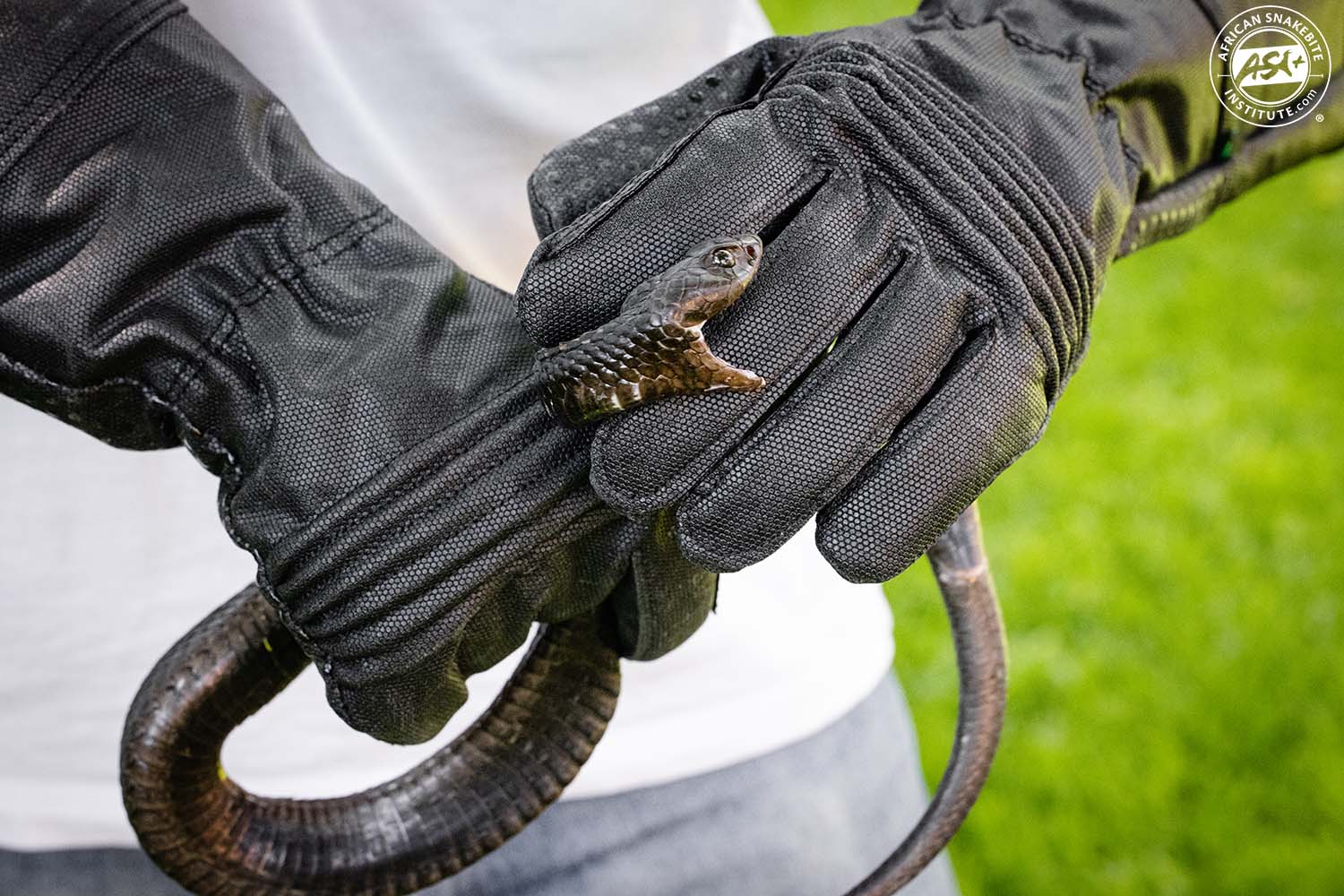
HexArmor Snake Resistant Gloves – back in stock!
The only trusted glove when it comes to working with venomous snakes – HexArmor gloves are used in snake parks and zoos throughout the world.
HexArmor Snake Resistant gloves are made of SuperFabric® brand material that provides an extra level of protection when working with venomous snakes. Gauntlet design and pre-curved shape for maximum comfort and ultimate protection, with a specialised silicone gripping surface on the palm.
Price R12500.00 per pair (including VAT)
|
| Click here to order |
|
|
|
|
|
Back-fanged snakes such as Boomslangs and vine snakes generally have small venom yields, and their venom delivery is less efficient than that of mambas or cobras. This is due to the structure of their venom glands, known as Duvernoy’s glands. A Boomslang may bite a large chameleon, release it, and then reposition itself to bite again. By chewing and applying pressure to the venom glands, it eventually injects enough venom to kill its prey.
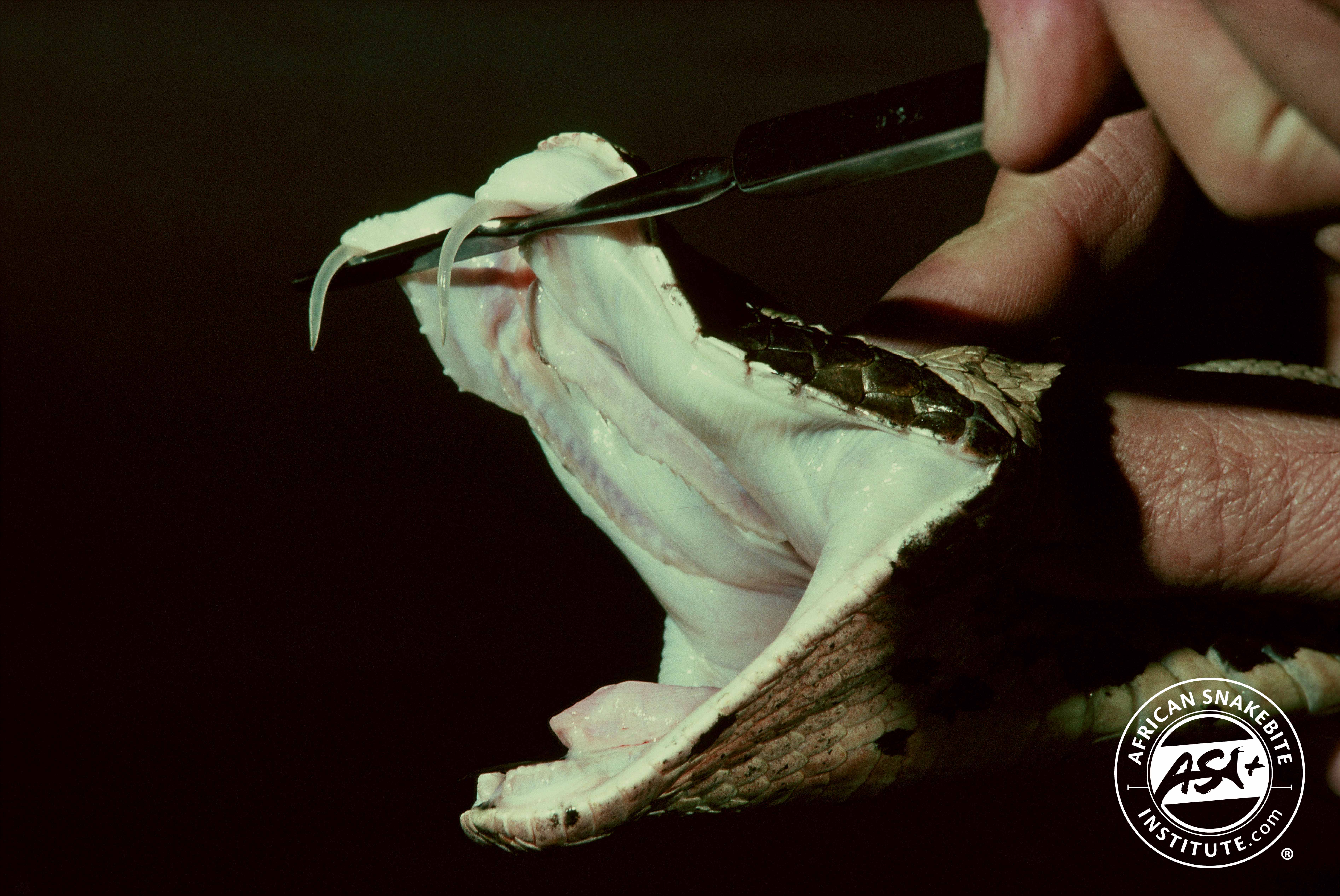
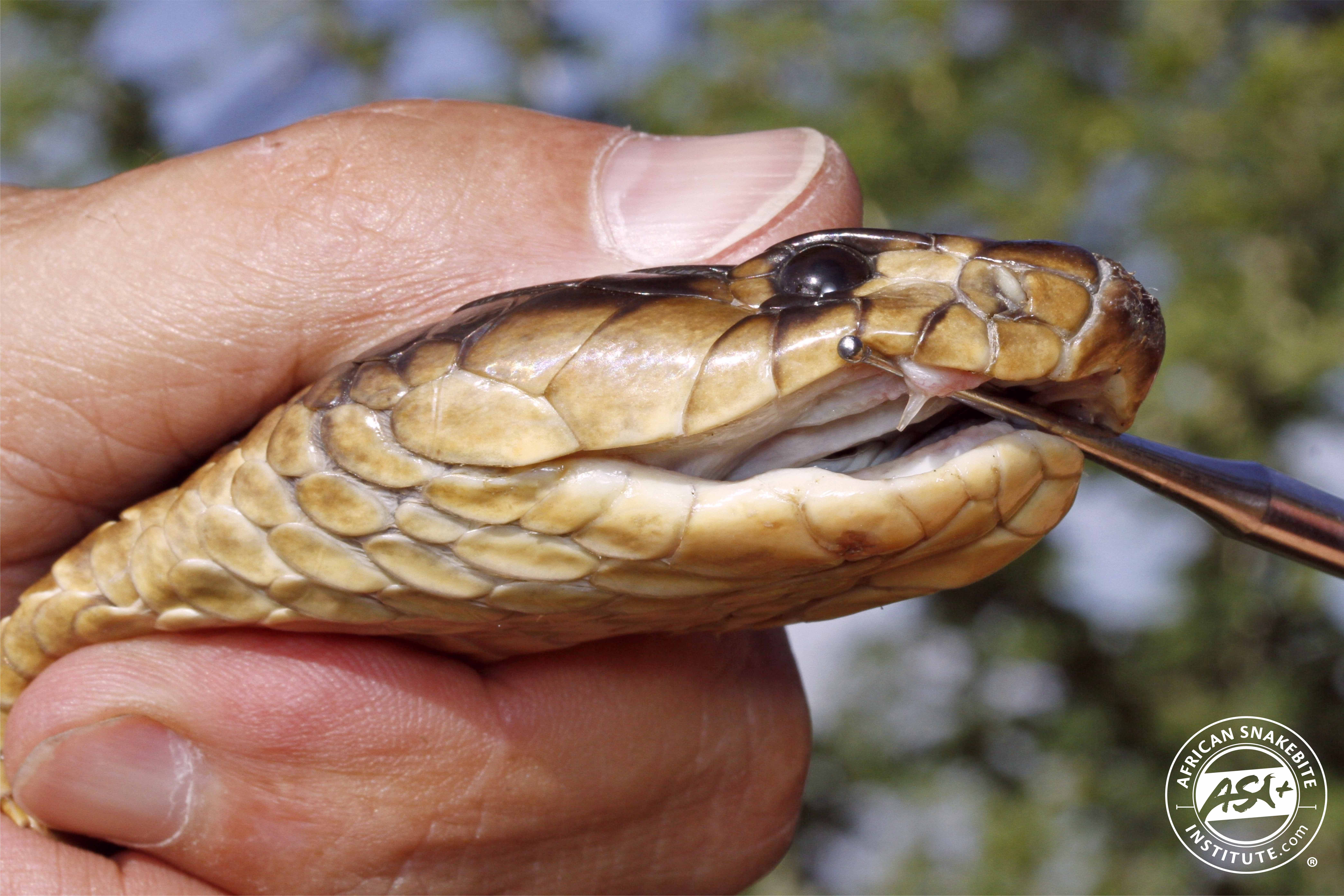
In contrast, mambas, cobras, and their relatives, known as elapids, have short, fixed, hollow fangs located at the front of the upper jaw. These fangs rarely exceed 6 mm in length but allow for rapid and effective envenomation. Adders differ again, having long, hinged fangs that fold against the roof of the mouth when not in use. Puff Adder fangs can exceed 2 cm, while Gaboon Adder fangs may reach an impressive 4 cm.
|
|
|
 |
|
The massive fangs of a Gaboon Adder. In large specimens, these fangs may reach 4 cm in length.
|
|
|
|
|
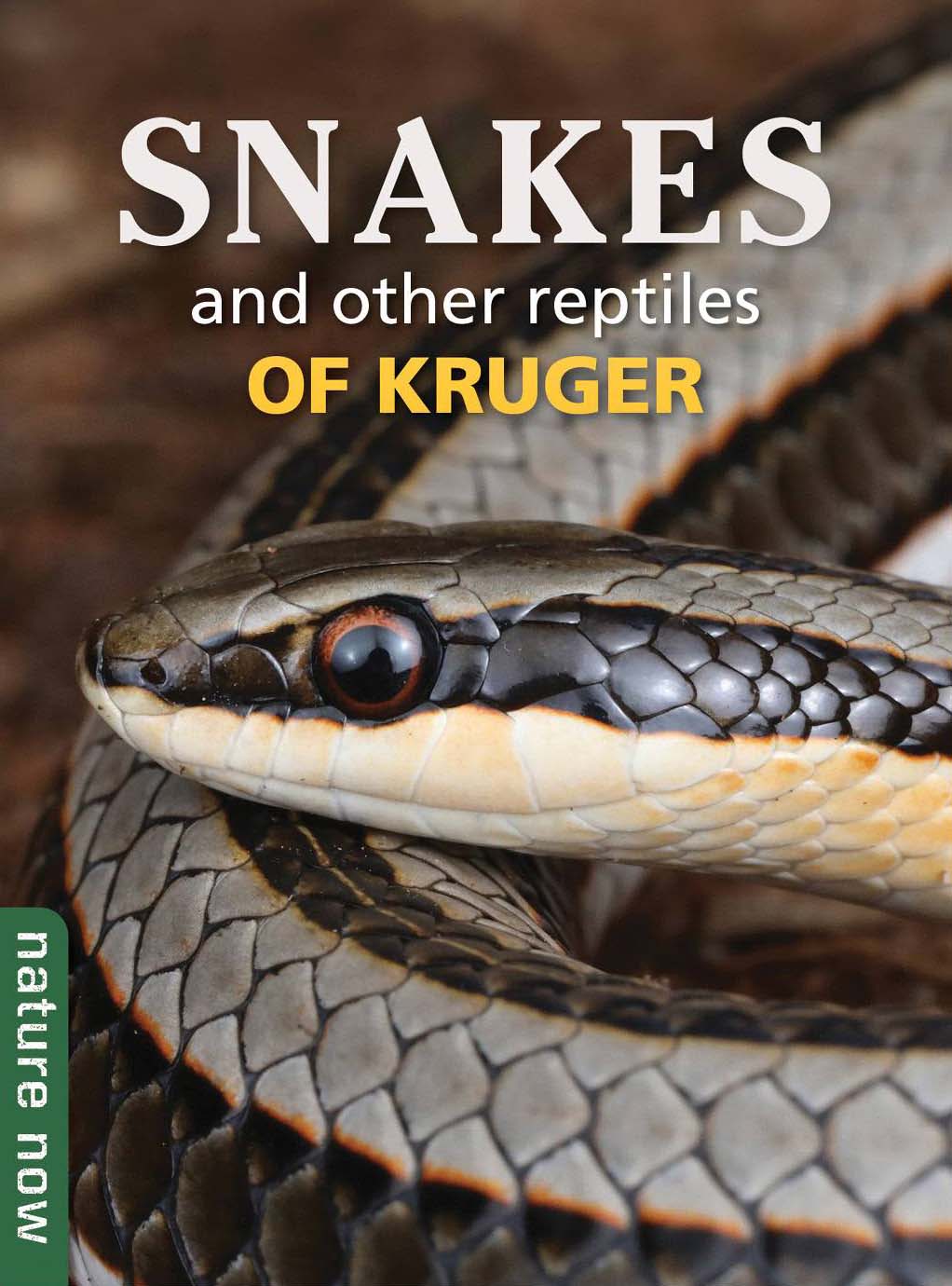
Snakes and other reptiles of Kruger.
A richly illustrated, beginner-friendly guide – ideal for visitors keen to identify and learn more about the park’s reptiles.
This beginner-friendly guide features over
60 species of snake, lizard, terrapin, tortoise and crocodile, with basic identification pointers, interesting facts and notes on best viewing.
Price R270.00 (including VAT)
|
|
|
| Click here to order |
|
|
|
|
|
It appears that venom composition varies not only between species but may also between regions. This is well studied in America, where Timber Rattlesnakes are known to be Haemotoxic in the north of the range but more neurotoxic in the south of the range. While we often categorise venom as neurotoxic, cytotoxic, or haemotoxic, most venoms are a combination of these effects.
Neurotoxic venom primarily affects the nervous system and can interfere with breathing. It acts quickly and is characteristic of snakes such as the Black Mamba, Cape Cobra and other non-spitting cobras.
Cytotoxic venom causes pain, swelling, blistering and tissue damage that may spread depending on the severity of the bite. The Puff Adder, spitting cobras, and Bibron’s Stiletto Snake are good examples.
Haemotoxic venom disrupts blood clotting, leading to bleeding from the bite site, nosebleeds, bleeding from mucous membranes, and in severe cases, uncontrolled internal bleeding including brain haemorrhaging. The Boomslang and Vine Snake are classic examples, though many other species possess venom with mixed effects.
This can be seen in Puff Adders, where typical cytotoxic symptoms like swelling and blistering are present, but there may also be some haemorrhaging and other haemotoxic symptoms in bites.
|
|
|
 |
|
Many snakes like Cobras will put on a defensive display by extending an impressive hood to warn off a potential threat before biting. Cobras like this Snouted Cobra (Naja annulifera) have short fangs fixed to the front of the jaw. Photo Ashley Kemp.
|
|
|
|
The amount of venom a snake injects usually depends on the size of its prey. A mamba needs very little venom to kill a rat but far more to subdue a dassie. Venom production is energetically expensive, and snakes are highly energy-efficient predators. Wasting large volumes of venom on small prey serves no purpose.
Snakes have little desire to bite humans and will usually attempt to flee. Many species have defensive strategies to ward off a threat. This includes making a hood, like the cobras. Inflating the neck like Boomslang and Vine Snakes and hissing like the adders and some other snakes. However, if a snake is stepped on, handled, injured, or trapped in a confined space, it may bite. The greater the perceived threat, the more venom is likely to be injected. In many surprise encounters, venomous snakes deliver dry bites, injecting no venom at all, or only a small amount — enough to cause discomfort but not serious harm. This is especially common in back-fanged snakes but has been recorded in other snakes.
Because most snakebite victims are unable to identify the snake involved, doctors treat symptoms rather than species. Approximately nine out of ten hospitalised snakebite patients do not require or receive antivenom. This is generally because the bite is mild with minimal venom injected. However, in severe cases, antivenom remains the only effective treatment.
In the event of a snakebite, get the victim to the nearest hospital where they can be stabilised ,and if necessary, intubated.
|
|
|
|
|
|
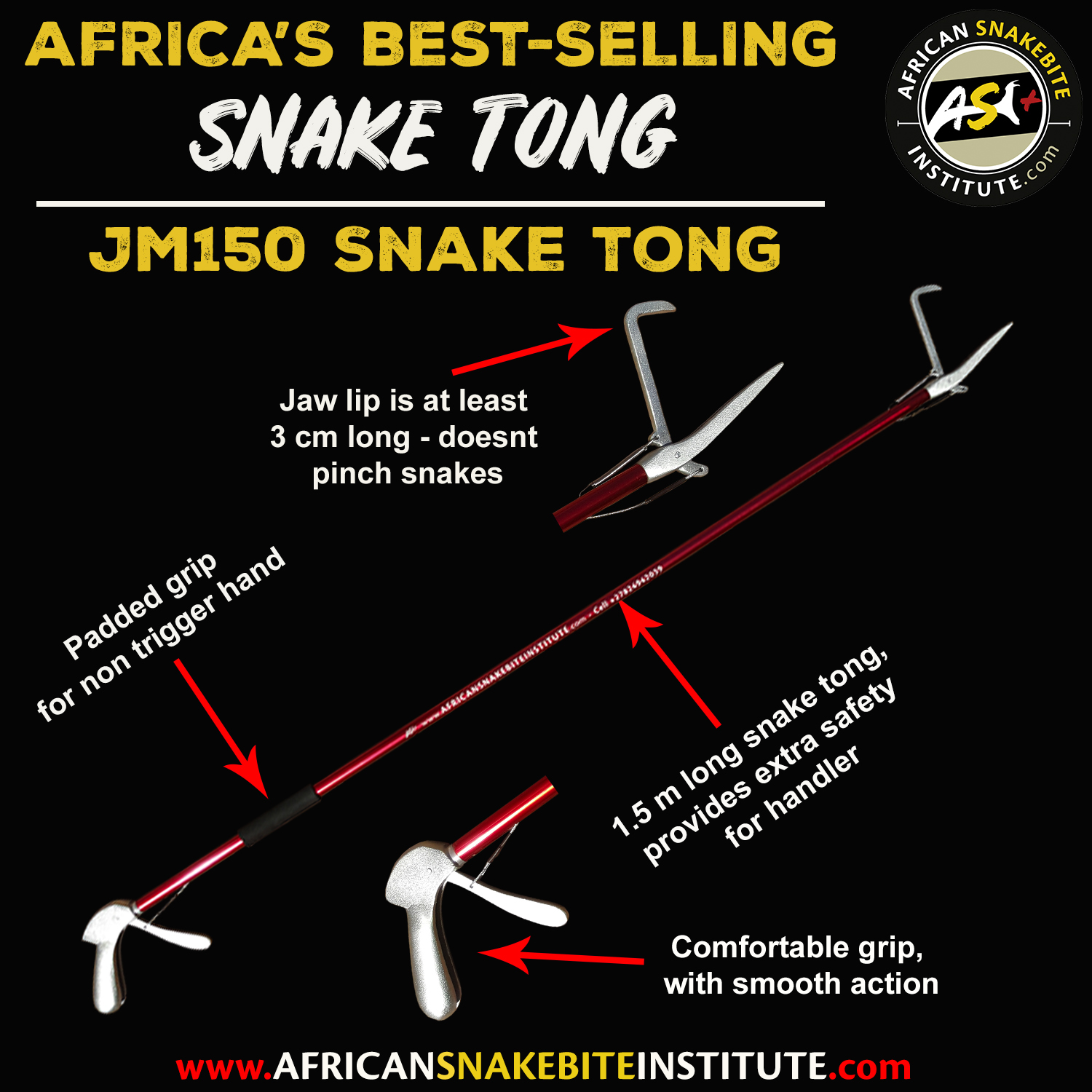
Bestsellers.
The JM150 Snake Tong are by far our most popular snake tong for both discerning corporate and private clients. This tong is ideal for removing problem snakes, especially on mines, game farms and game lodges.
Price R1350.00 (incl VAT)
|
|
|
| Click here to order |
|
|
|
|
|
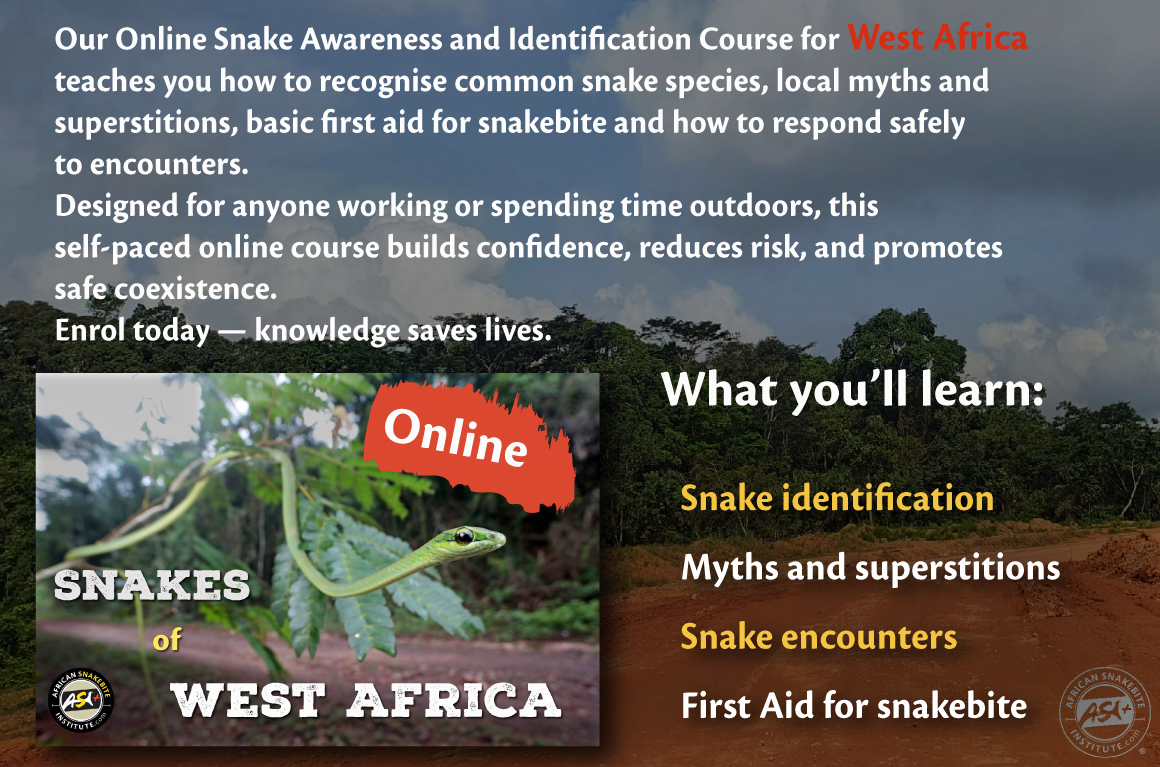
We're excited to be launching our brand new Snakes of West Africa - online course!
A first of it's kind for West Africa. View the curriculum and sign up here.
|
|
|
|
|
|
|
|
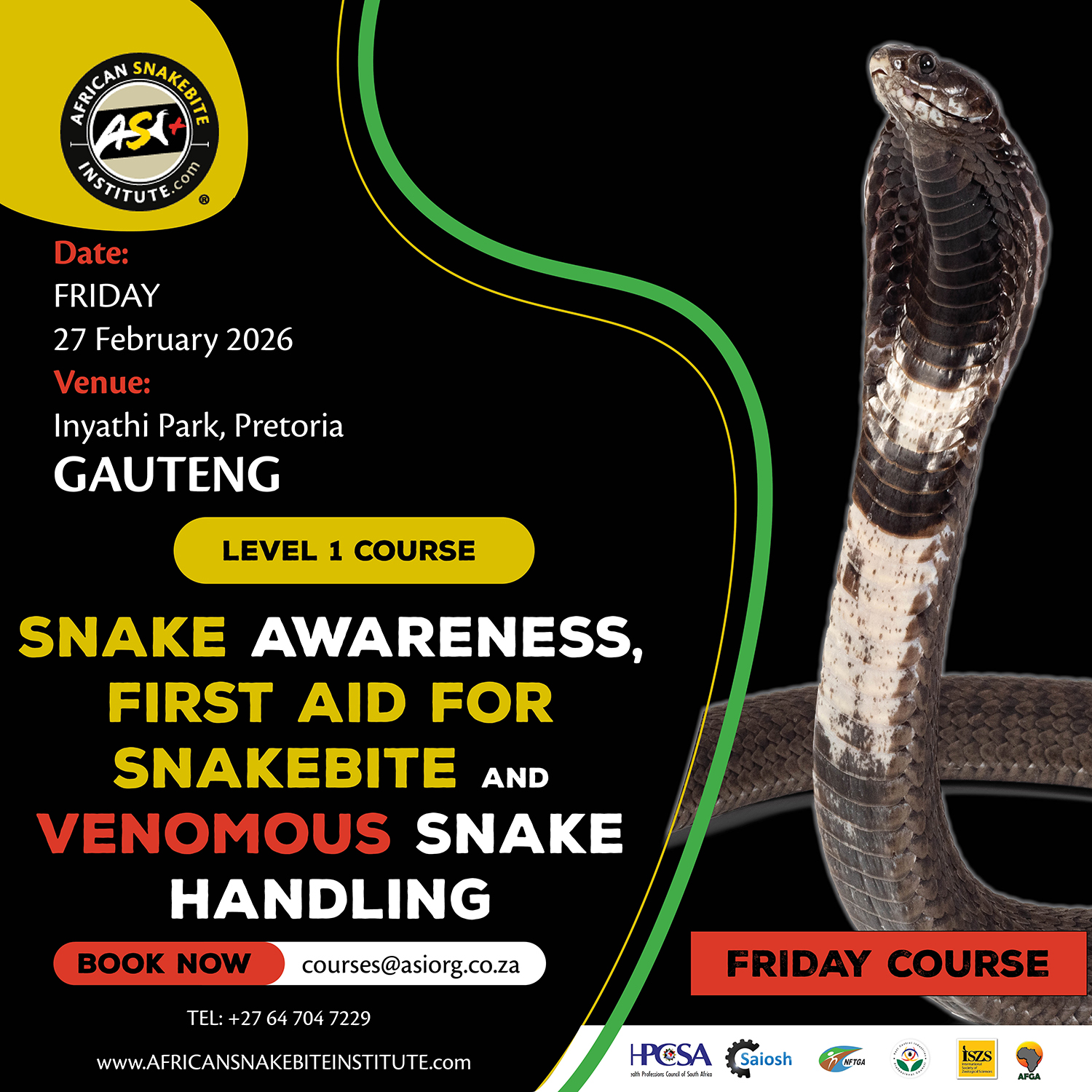
GAUTENG
PRETORIA
Snake Awareness, First Aid for Snakebite and Venomous Snake Handling Course
Date: FRIDAY 27 February 2026
Venue: Inyathi Park, Pretoria
|
|
|
| Book here |
|
|
|
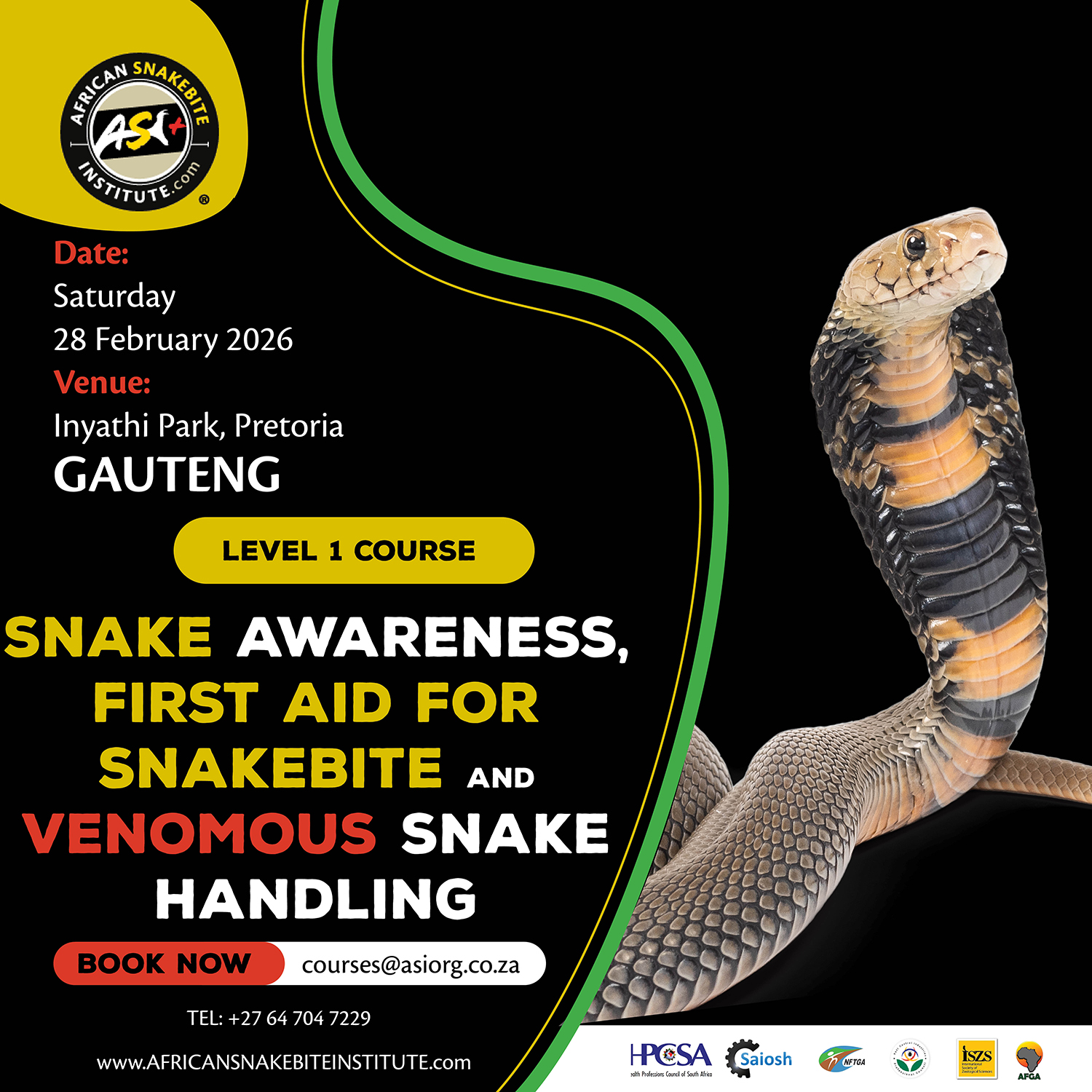
GAUTENG
PRETORIA
Snake Awareness, First Aid for Snakebite and Venomous Snake Handling Course
Date: SATURDAY 28 February 2026
Venue: Inyathi Park, Pretoria
|
|
|
| Book here |
|
|
|
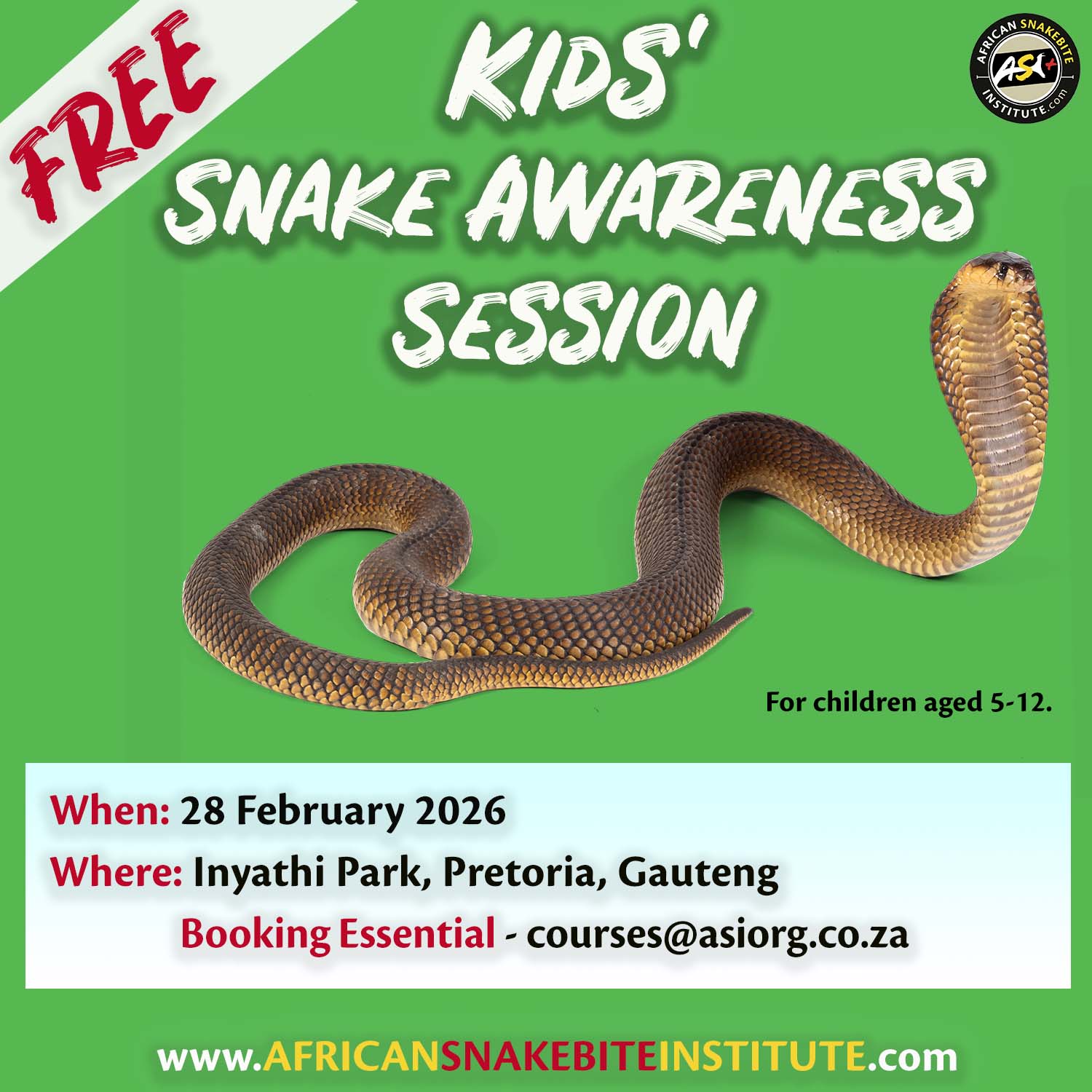
GAUTENG
PRETORIA
FREE Kids' Snake Awareness Session
Date: SATURDAY 28 February 2026
Venue: Inyathi Park, Pretoria
|
|
|
| Book here |
|
|
|
GAUTENG
PRETORIA
Advanced Venomous Snake Handling
Date: SUNDAY 01 March 2026
Venue: Inyathi Park, Pretoria
|
|
|
| Book here |
|
|
|
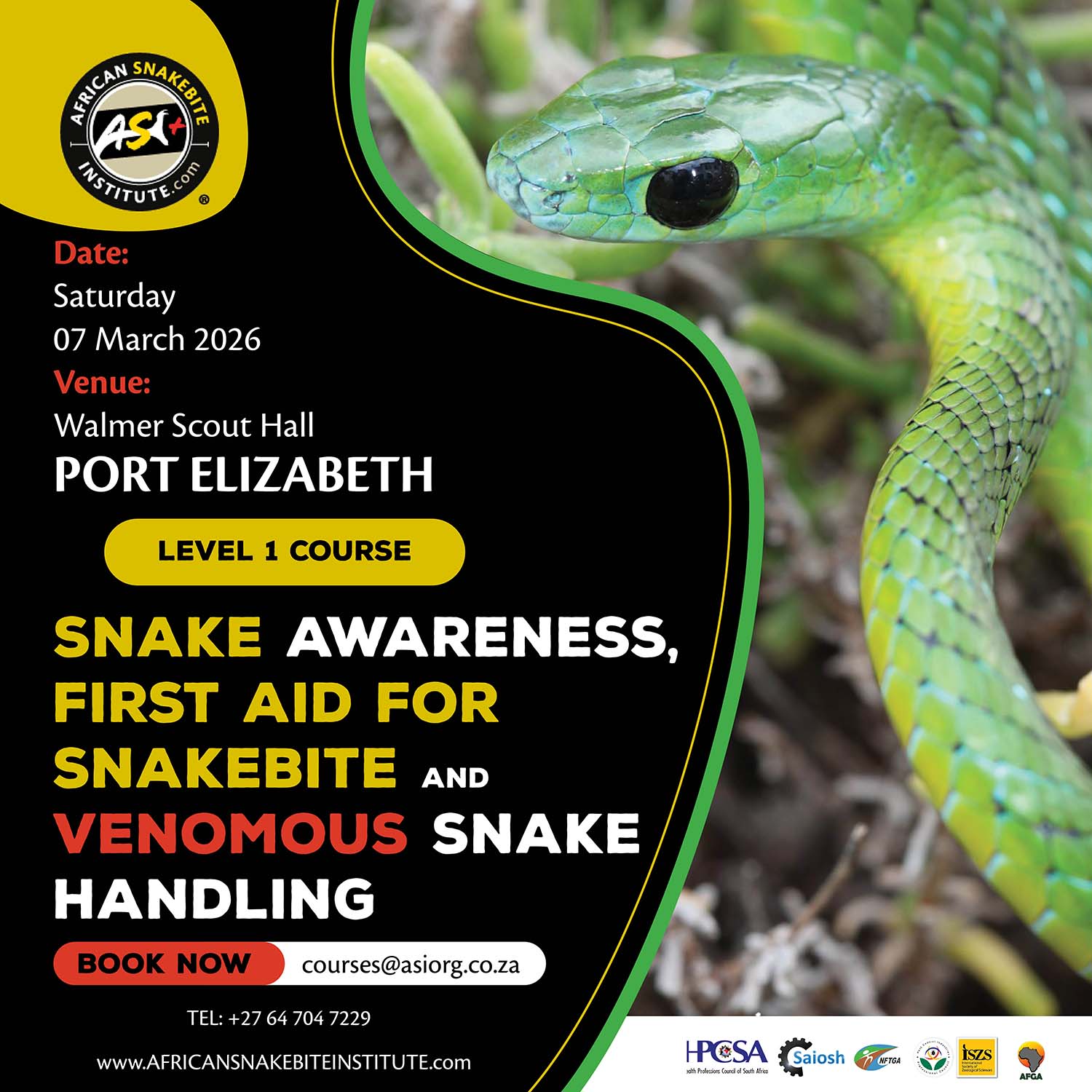
EASTERN CAPE
PORT ELIZABETH
Snake Awareness, First Aid for Snakebite and Venomous Snake Handling Course
Date: SATURDAY 07 March 2026
Venue: Walmer Scout Hall, Port Elizabeth
|
|
|
| Book here |
|
|
|
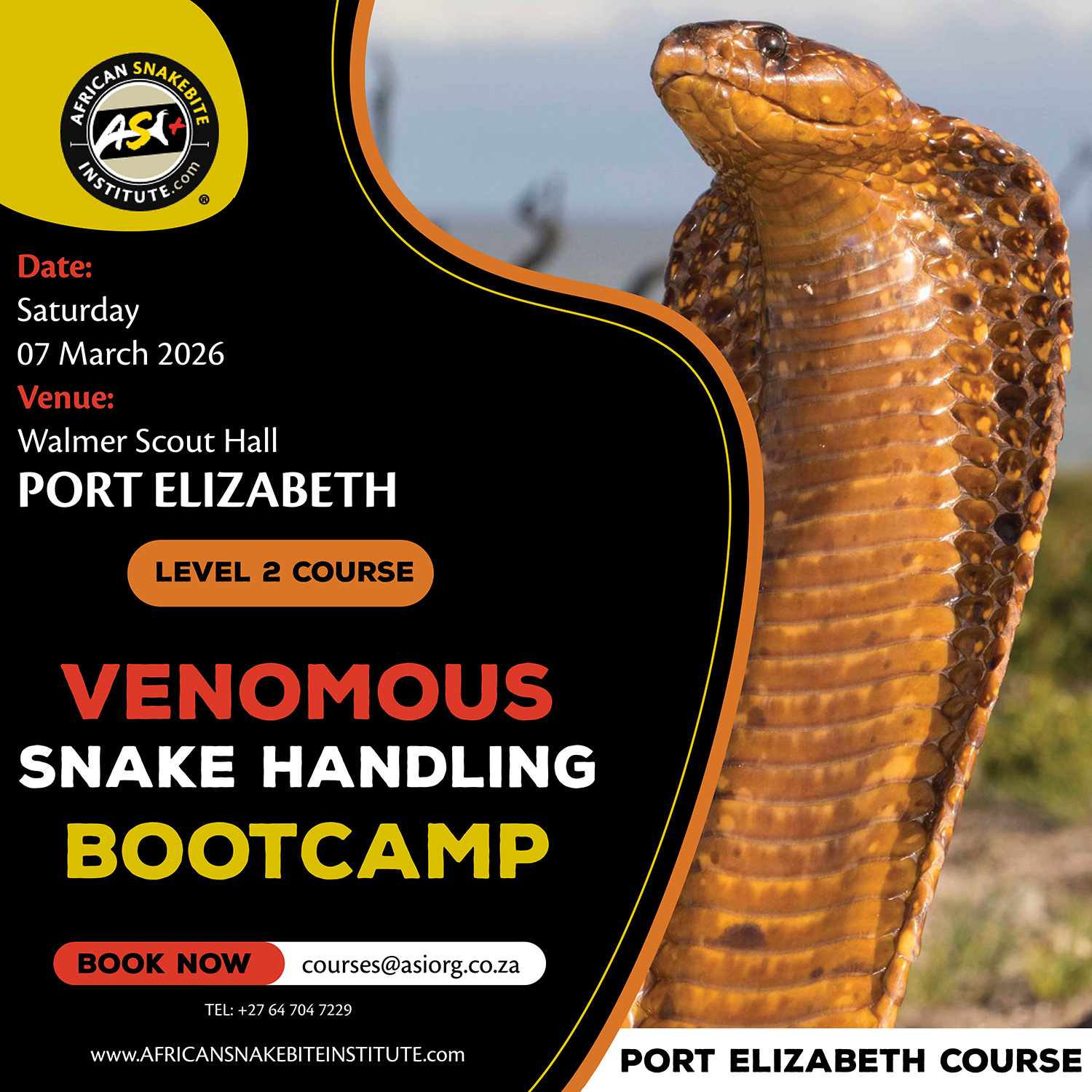
EASTERN CAPE
PORT ELIZABETH
Venomous Snake Handling Bootcamp
Date: SATURDAY 07 March 2026
Venue: Walmer Scout Hall, Port Elizabeth
|
|
|
| Book here |
|
|
|
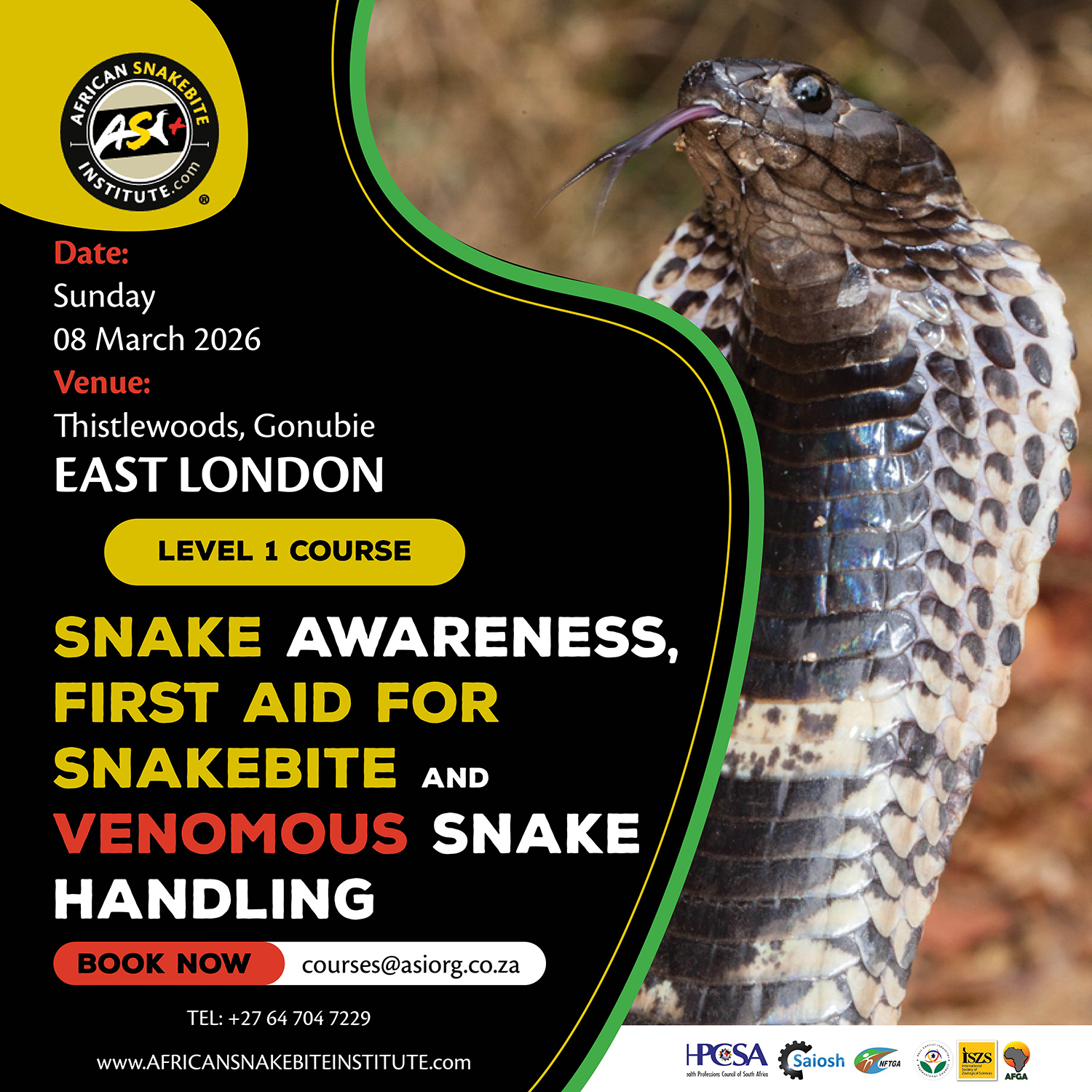
EASTERN CAPE
EAST LONDON
Snake Awareness, First Aid for Snakebite and Venomous Snake Handling Course
Date: Sunday 08 March 2026
Venue: Thistlewoods, Gonubie, East London
|
|
|
| Book here |
|
|
|
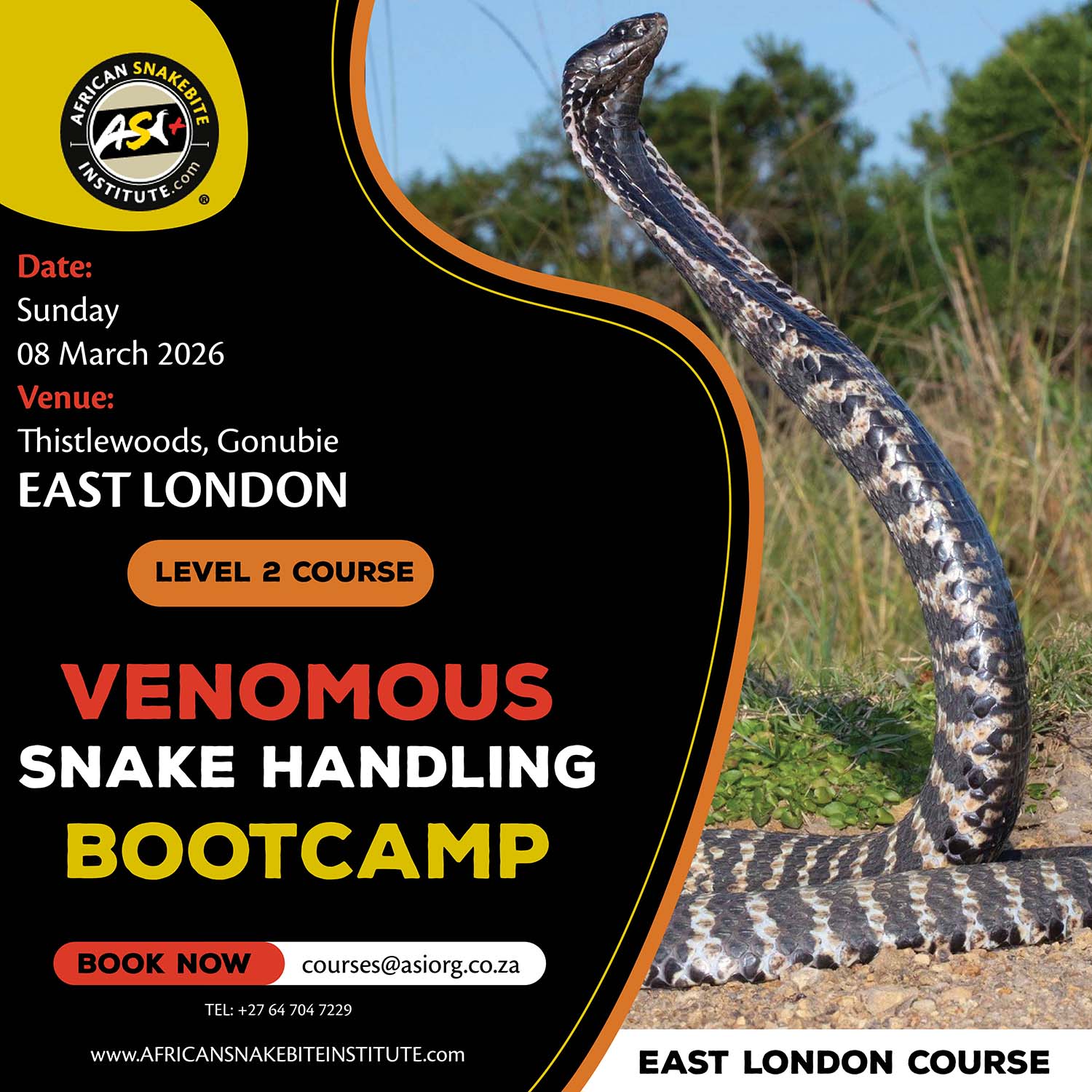
EASTERN CAPE
EAST LONDON
Venomous Snake Handling Bootcamp
Date: Sunday 08 March 2026
Venue: Thistlewoods, Gonubie, East London
|
|
|
| Book here |
|
|
|
WEASTERN CAPE
GANSBAAI
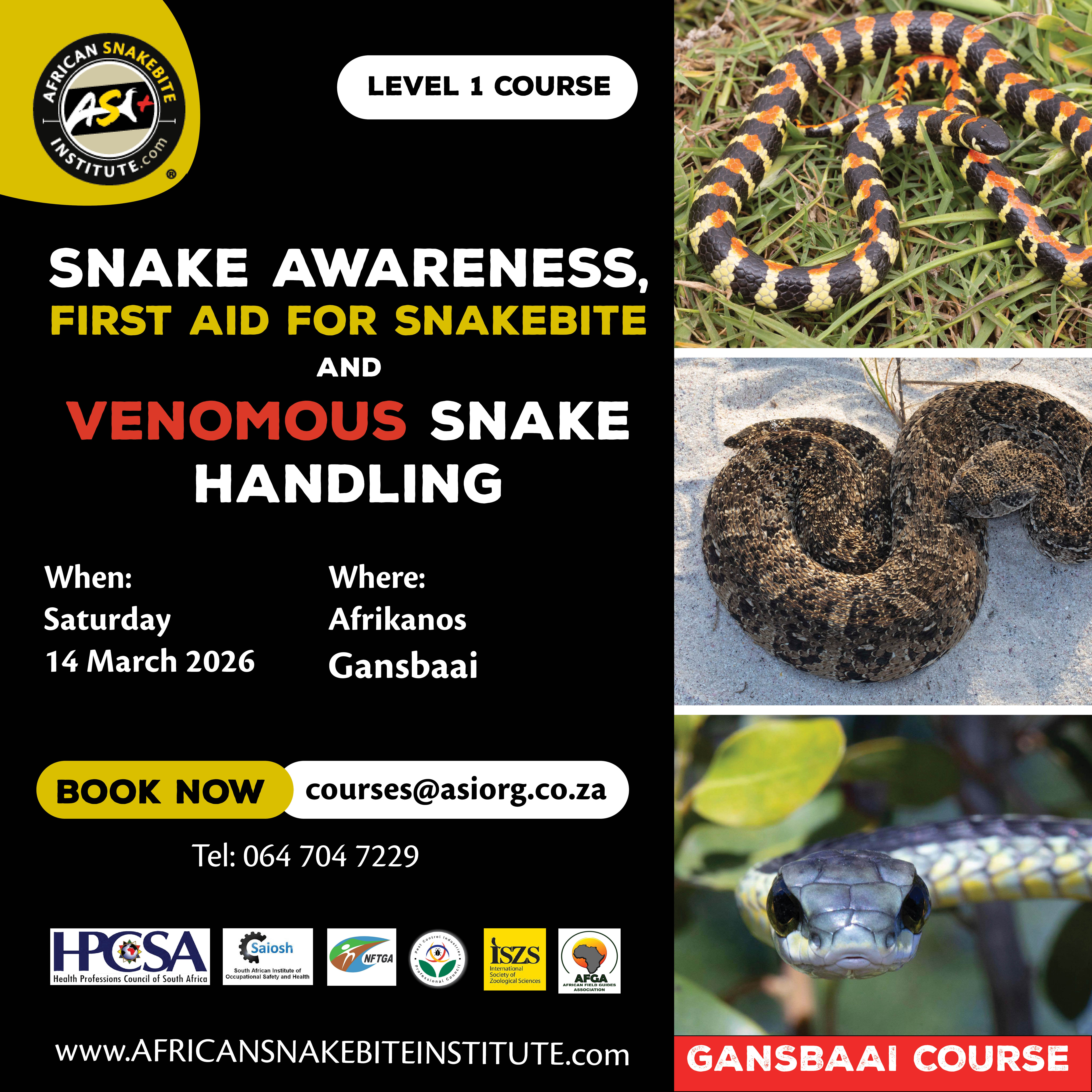
Snake Awareness, First Aid for Snakebite and Venomous Snake Handling Course
Date: Saturday 14 March 2026
Venue: Afrikanos, Gansbaai
|
|
|
| Book here |
|
|
|
WEASTERN CAPE
GANSBAAI
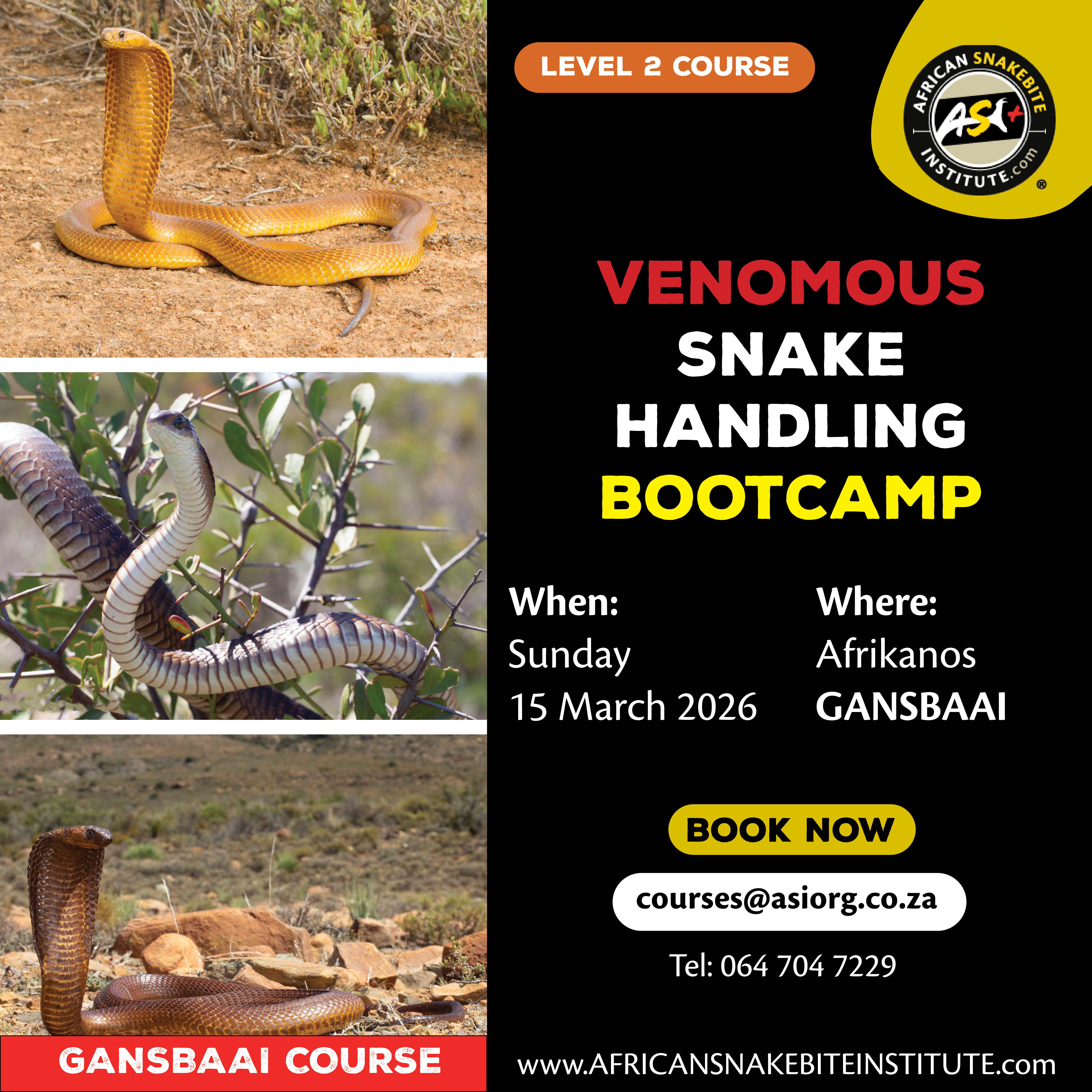
Venomous Snake Handling Bootcamp
Date: Sunday 15 March 2026
Venue: Afrikanos, Gansbaai
|
|
|
| Book here |
|
|
|
|
|
|
|
Johan Marais is the author of various books on reptiles including the best-seller - A Complete Guide to Snakes of Southern Africa. He is a popular public speaker and CEO of the African Snakebite Institute.
The African Snakebite Institute (ASI) offers a variety of courses including Snake Awareness, Scorpion Awareness and Venomous Snake Handling. ASI is accredited by the International Society of Zoological Sciences (ISZS) and is a Travel Doctor-approved service provider. The courses are also accredited by the Health Professions Council of South Africa (HPCSA). ASI is the largest provider of quality snake handling and safety equipment in Africa!
|
 |
|
Copyright © 2026 African Snakebite Institute, All rights reserved.
Our mailing address is:
admin@asiorg.co.za
unsubscribe from this list
|
|
|
|
|