|
You are receiving this email because you signed up for the monthly ASI Newsletter.
If you no longer wish to receive these emails you can unsubscribe here.
|
|
|
 |
|
August 2026 - Snakes and global warming
|
|
|
|
It is often claimed that the risk of snakebite is increasing as a result of global warming and that snakes are becoming more aggressive.
Unlike mammals and birds, snakes are ectothermic, meaning they rely on external temperatures to regulate their body heat. Their activity, feeding, reproduction, and survival are all closely linked to environmental conditions. Even small changes in temperature can alter how and where snakes live.
In the natural sciences, we have overwhelming evidence that global warming is already a significant problem and has a major impact on reptiles. Especially reptiles that are adapted to cool climates on the tops of mountains. As the ambient temperature increases, many of the plants that make up that montane habitat may die off and the loss of habitat and increase in temperature may force reptiles higher up until they eventually can’t escape the increased heat.
|
|
|
 |
|
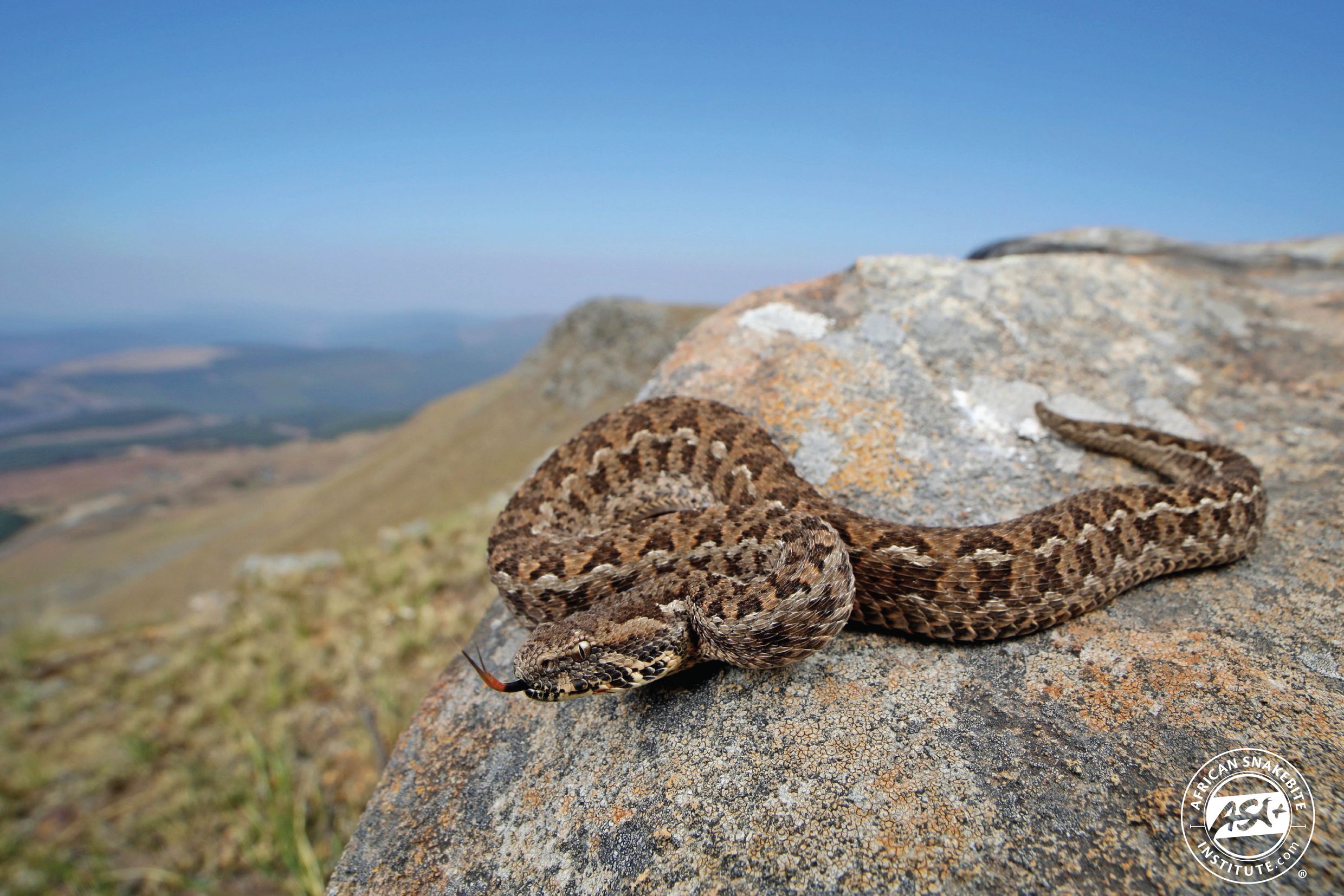
Throughout most of their range, Berg Adders (Bitis atropos) are found at high elevations and need the cool temperatures of winter. Photo - Luke Kemp
|
|
|
|
Warmer weather may also allow generalist species to spread further, and we expect an increase in the distribution of warm-adapted snakes. But warmer weather may also alter rain patterns and periods of drought often cause snakes to enter gardens and houses in search of water.
The availability of suitable prey is also a determining factor in the distribution of many snake species. Most snakes feed on rodents, birds, and frogs, but some larger snakes may also prey on feral cats and farm animals. Wherever there are human settlements, there is more food for rodents. Water sources like dams, ponds and irrigation systems attract frogs and other animals. This increase in food will attract predators like snakes and many cobras and mambas end up in houses and gardens in search of prey.
|
|
|
 |
|
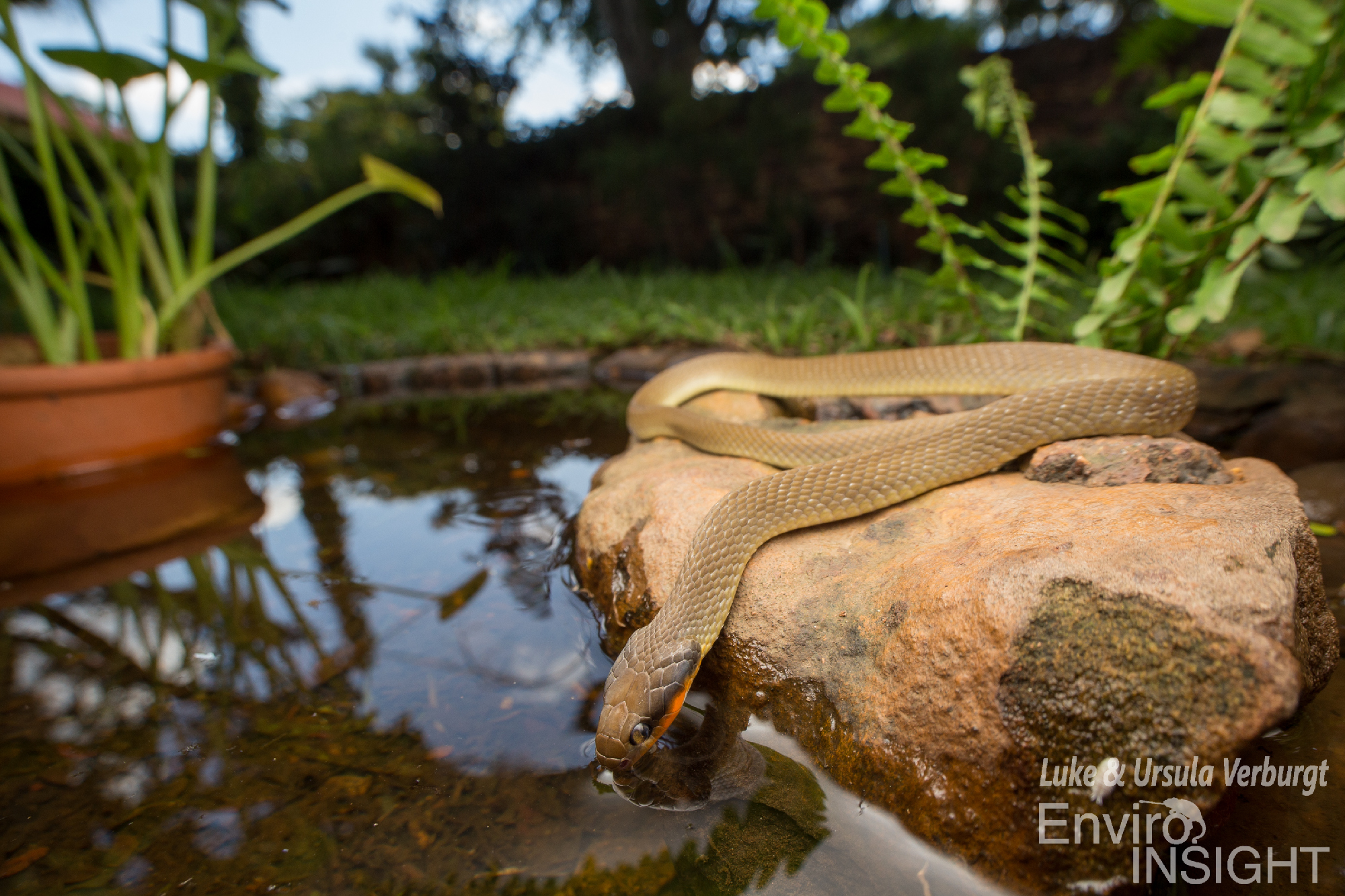
Many snakes like this Herald Snake (Crotaphopeltis hotamboeia) are common garden visitors looking for frogs and water.
|
|
|
|
|
|
Snake Tong Trade in deal!
Trade in your old snake tong, and get R450.00 off any of our new
ASI Elite Snake Tongs.
(Subject to 1 tong per customer - shipping for customers account)
Valid for August 2026.
|
|
|
| Click here to mail us |
|
|
|
|
|
As residential neighbourhoods, industrial areas, and agricultural land continue to expand, suitable habitat for snakes is reduced. In suburban areas, snakes are forced into small remnants of suitable habitat. Durban is an excellent example. Fifty years ago, encountering a Black Mamba was a rare event, but today more than one hundred Black Mambas are removed from people's homes and gardens in the greater Durban area, every summer.
The claim that snakes are becoming more aggressive cannot be substantiated, and we currently have no data to prove it. In most cases where snakes bite people, it is out of desperation. Someone may accidentally step on a snake, and the snake then bites in self-defence. Or a nervous snake such as a Black Mamba may accidentally become trapped in a small storeroom and is then unable to escape easily. In such a situation, it may bite. However, if you are five paces or more away from a snake—even a Black Mamba—you are safe.
|
|
|
|
|
|
Snakes and Snakebite in Southern Africa is an essential field guide to identifying Southern Africa's dangerous snakes, along with several commonly encountered harmless species. It also explains snakebite symptoms and provides practical, up-to-date first aid advice.
Fully revised and expanded, this third edition includes nine additional species, over 250 new photographs, updated medical information, distribution maps, and clear, full-colour images. An invaluable resource for anyone who spends time outdoors.
|
|
|
| Click here to order |
|
|
|
|
|
Have you attended one of our courses or purchased snake handling equipment from us? We’d love to hear about your experience!
Share your feedback, photos, or review and stand a chance to WIN a signed copy of A Complete Guide to the Snakes of Southern Africa — delivered straight to your door.
🐍📚 Click here to leave a review.
|
|
|
|
|
 |
Congratulations to Anita Jacobs on winning a copy for her recent review!
|
|
|
|
|
|
According to estimates by the World Health Organization, more than five million people are bitten by snakes each year globally, resulting in around 100,000 human deaths annually. Based on these figures, a target was set several years ago to reduce snakebite deaths and morbidity by 50% by 2030. How much progress has been made toward this goal, we do not know, but in South Africa we have made little progress. So, what should we do?
Killing snakes does not solve the problem at all. First, people have to approach a snake to kill it, entering the danger zone, and many are bitten in the process. Secondly, removing a snake from an area with abundant food simply creates space for the next snake to move in.
To address the snakebite problem effectively, we must focus on education. Understanding and spreading snake awareness throughout Africa is vitally important. This is becoming easier as more resources are available than in the past. The African Snakebite Institute has developed hundreds of posters of common snakes of various countries across Africa, cities, towns, provinces and reserves, snake profiles and identification charts, and eBooks of snakes of various cities, towns, provinces and reserves. These resources are available on our website www.africansnakebiteinstitute.com as well as on the free app ASI Snakes.
|
|
|
 |
|
|
|
Preventative measures are always good, and snakes can be deterred from the garden or site by creating physical barriers around the house. Additionally, keeping the garden or site clean without piles of roofing material, heaps of bricks, old logs, long grass and thick bushes will reduce snakes. Snakes are naturally nervous and prefer to remain hidden or concealed. Clean gardens and sites are less attractive to snakes. Controlling snake prey is also beneficial. Bad food waste management will attract rats and mice. Piles of rocks will attract lizards. Dripping taps and ponds will attract frogs, and holes in the roof will attract birds, rodents and bats. Keep these areas clean and tidy to help reduce prey and thereby reduce snakes coming to your yard.
Protective clothing such as thick denim jeans and rubber or leather boots can also make a significant difference in remote areas. Using a flashlight when walking around at night will also greatly reduce the chance of standing on a snake. The vast majority of snakebite victims are bitten at night, on or near the foot, and generally after stepping on a snake.
|
|
|
 |
|
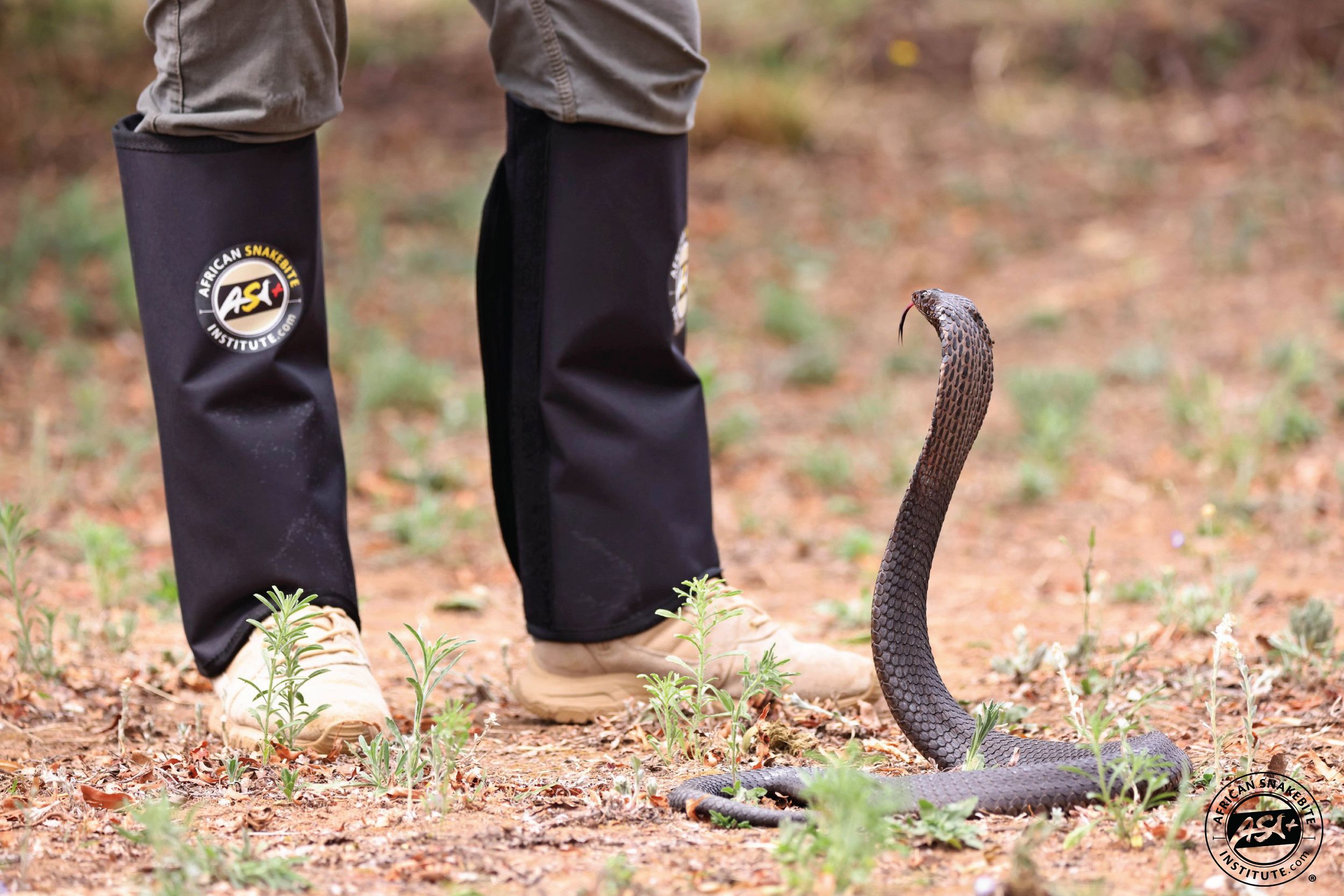
Over 80% of snakebites are inflicted on the lower leg, usually at night. Having good boots, long pants and snake gaiters can help reduce the chances of a bite.
|
|
Climate change is reshaping ecosystems across Africa, and snakes are no exception. While some species may adapt or even expand their ranges and become more common, others face significant challenges from rising temperatures, habitat loss, and changing rainfall patterns.
Continued monitoring, habitat conservation, and public awareness will be critical in understanding these changes, reducing snakebites and ensuring that Africa's remarkable snake diversity persists into the future.
|
|
|
|
|
|
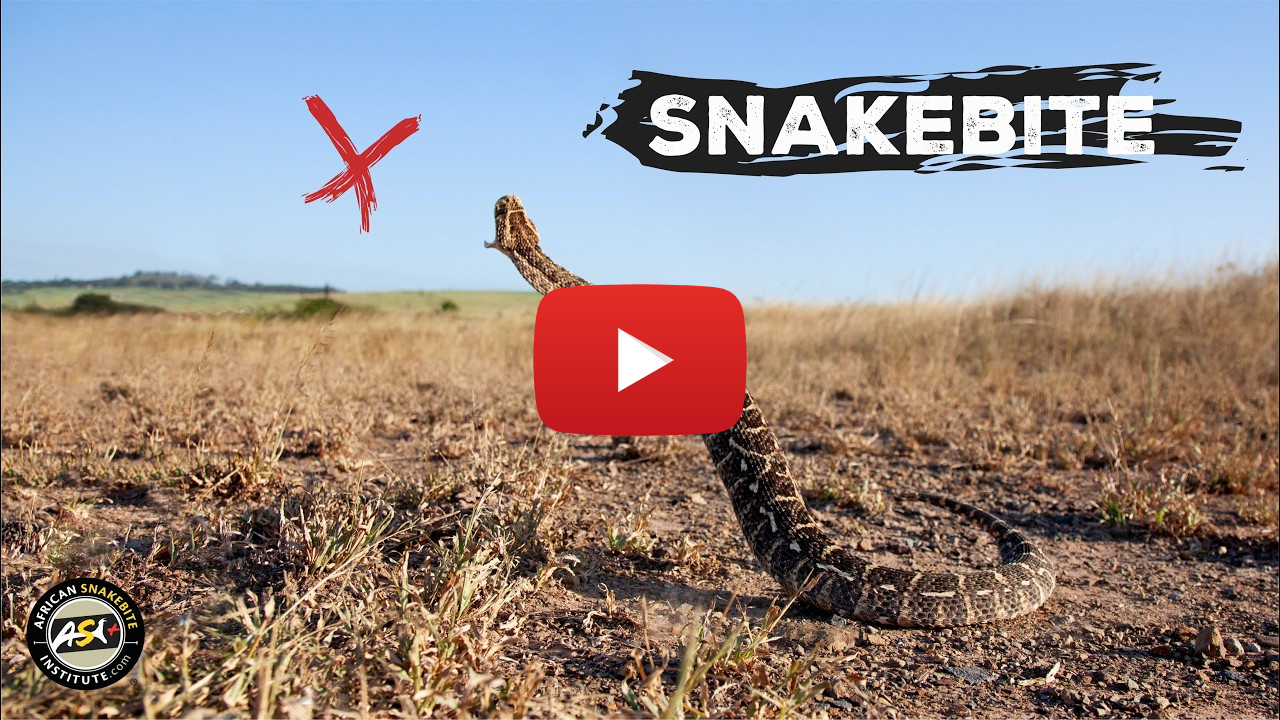
Snakebite is a potential risk for people who spend a lot of time outdoors. In this video, we share first aid techniques and show the correct protocols for dealing with bites from African snakes.
|
|
|
 |
|
|
|
|
|
KIMBERLEY
Snake Awareness, First Aid for Snakebite and Venomous Snake Handling Course
(Level 1 Course)
Date: SATURDAY 15 August 2026
Venue: McGregor Museum, Kimberley
|
|
|
| Book here |
|
|
|
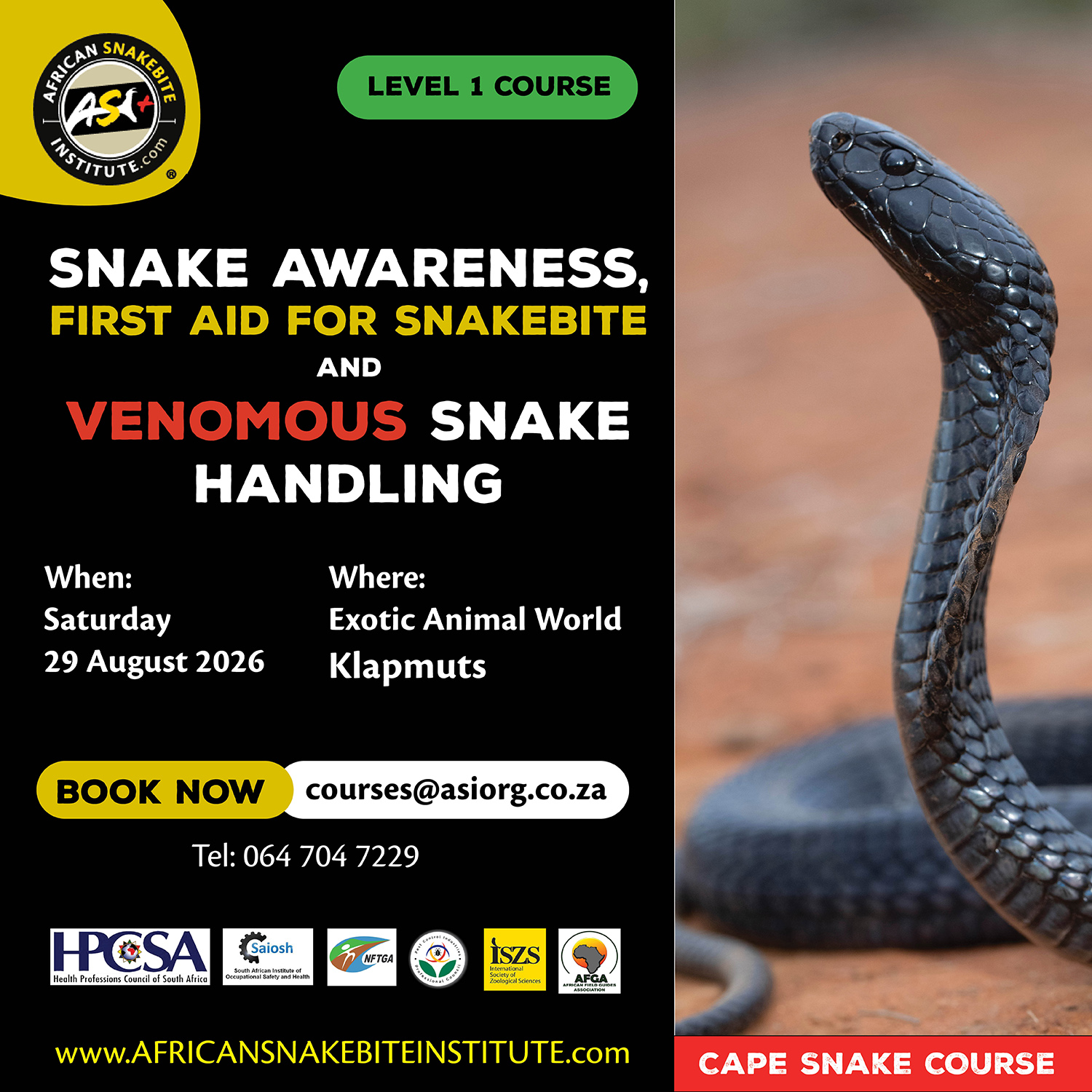
WESTERN CAPE
Snake Awareness, First Aid for Snakebite and Venomous Snake Handling Course
Date: FRIDAY 28 August 2026
Venue: Exotic Animal World, Klapmuts
|
|
|
| Book here |
|
|
|
WESTERN CAPE
Snake Awareness, First Aid for Snakebite and Venomous Snake Handling Course
Date: SATURDAY 29 August 2026
Venue: Exotic Animal World, Klapmuts
|
|
|
| Book here |
|
|
|
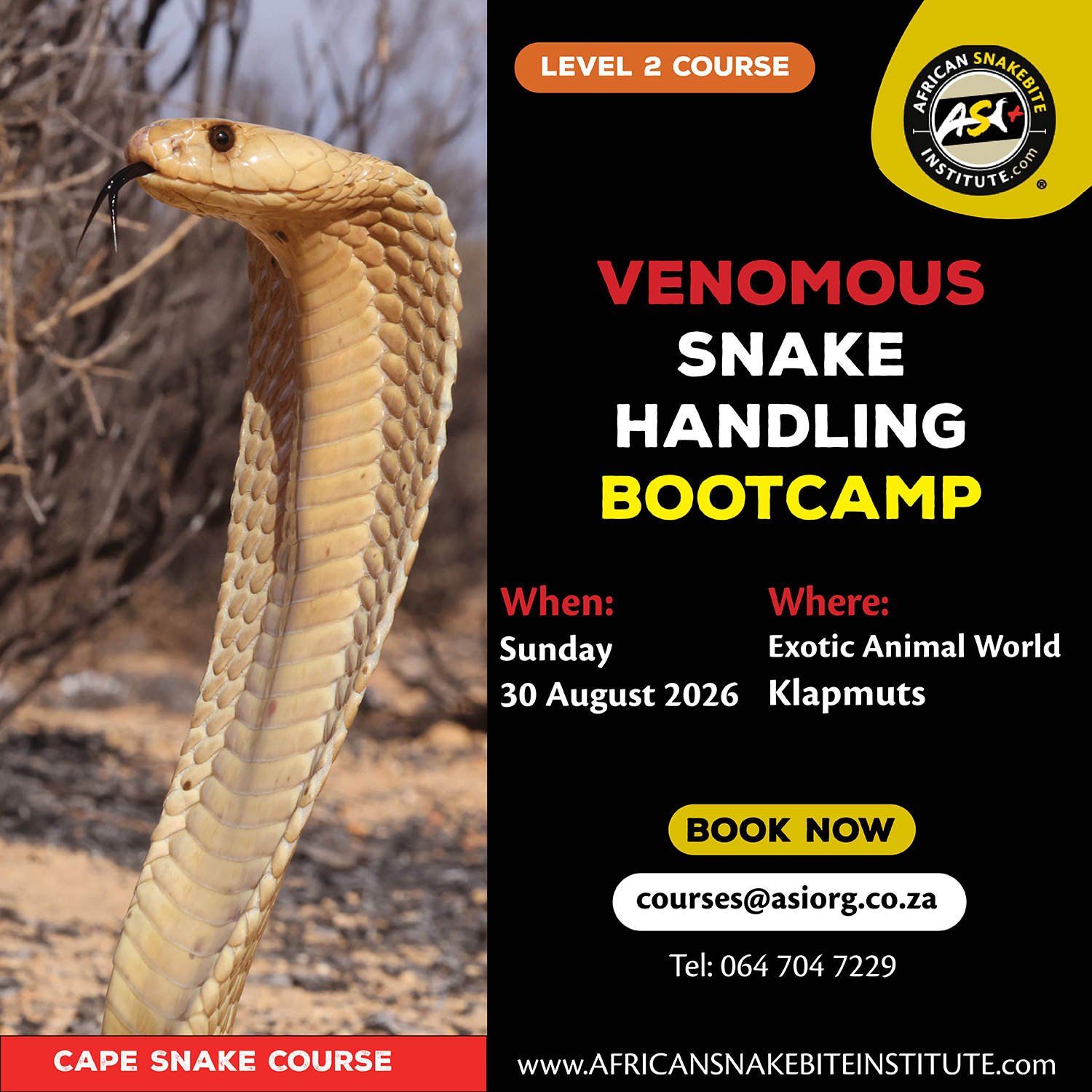
WESTERN CAPE
Venomous Snake Handling Bootcamp
(Level 2 Course)
Date: SUNDAY 30 August 2026
Venue: Exotic Animal World, Klapmuts
|
|
|
| Book here |
|
|
|
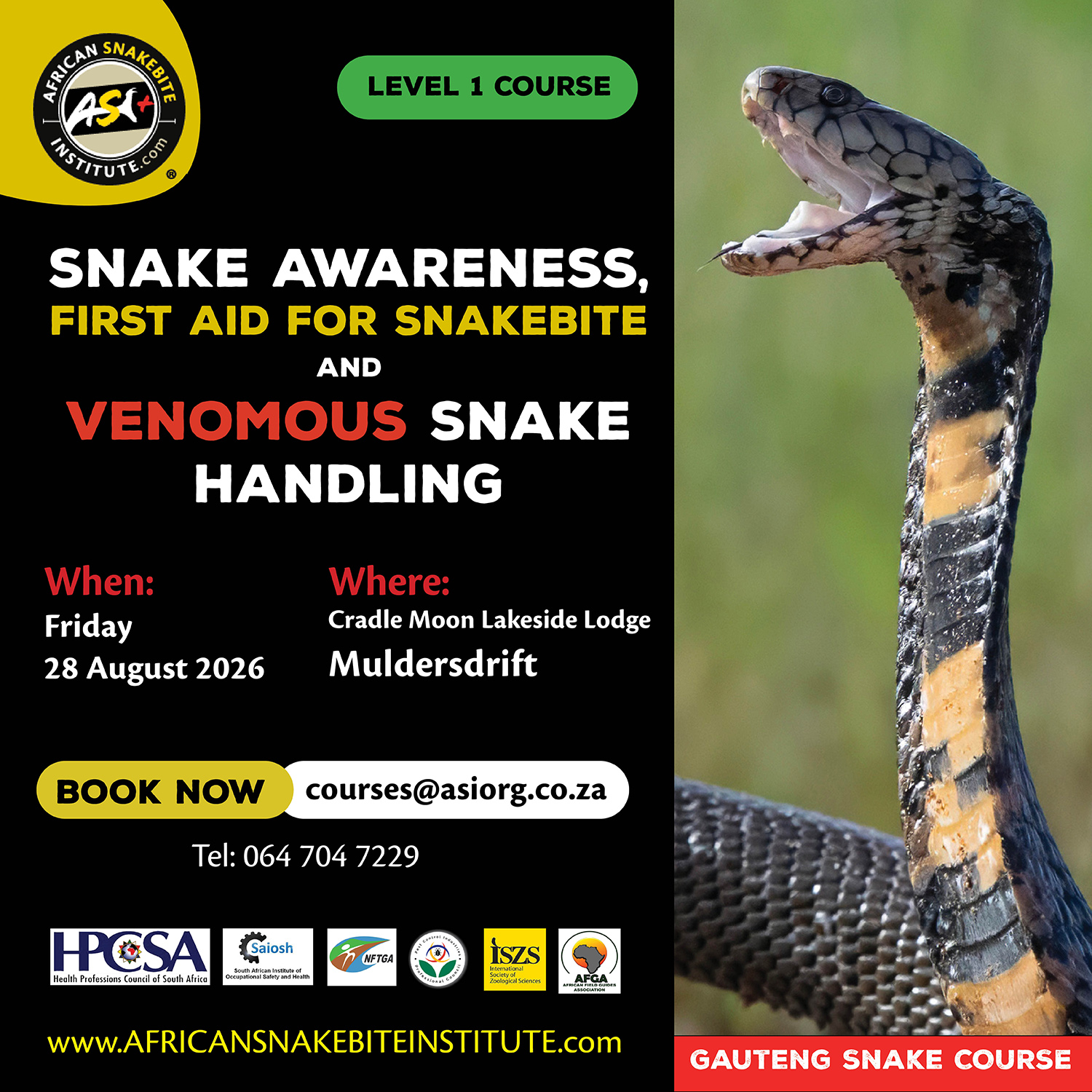
GAUTENG
Snake Awareness, First Aid for Snakebite and Venomous Snake Handling Course
(Level 1 Course)
Date: FRIDAY 28 AUGUST 2026
Venue: Cradle Moon Lakeside Lodge, Muldersdrift, Gauteng
|
|
|
| Book here |
|
|
|
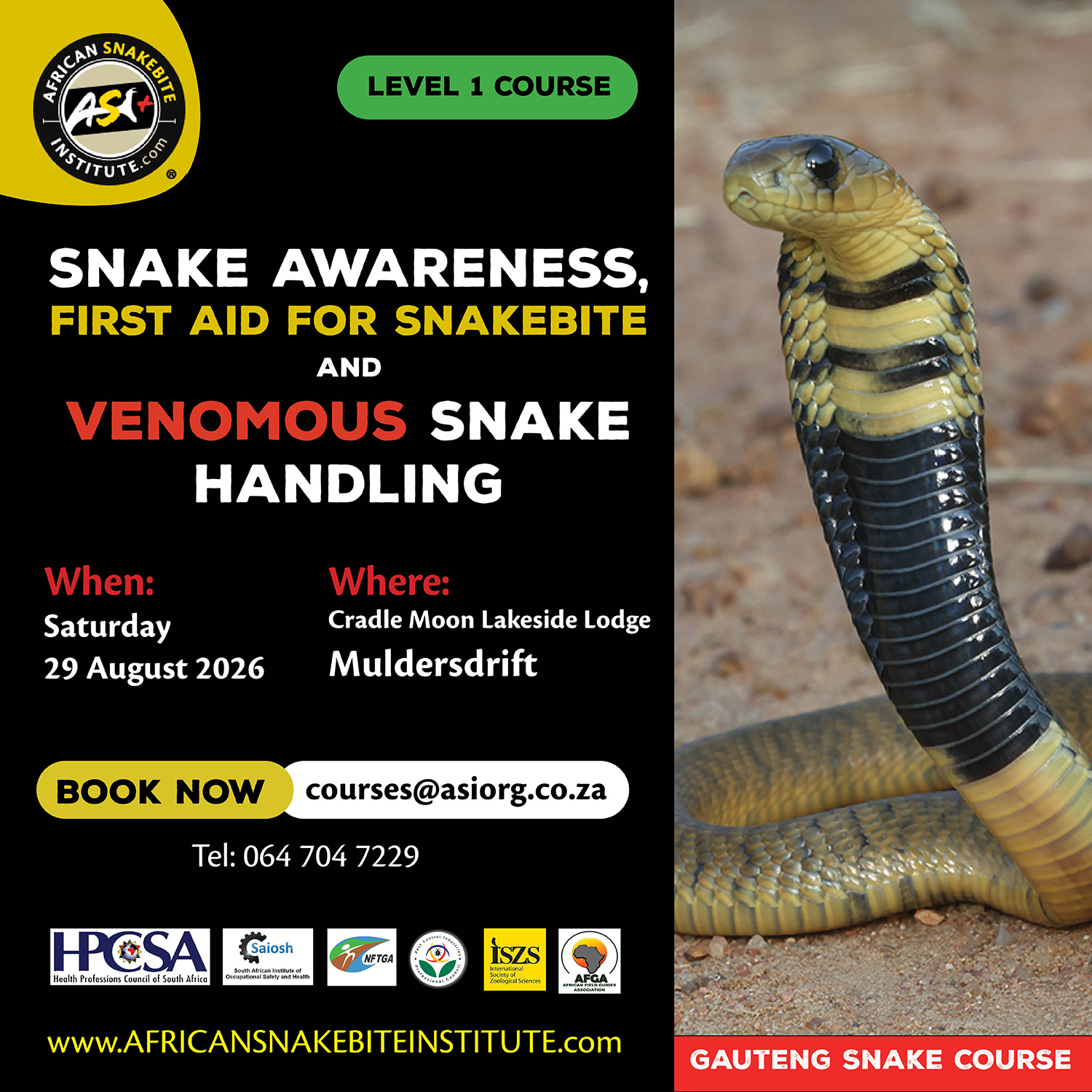
GAUTENG
Snake Awareness, First Aid for Snakebite and Venomous Snake Handling Course
(Level 1 Course)
Date: SATURDAY 29 August 2026
Venue: Cradle Moon Lakeside Lodge, Muldersdrift, Gauteng
|
|
|
| Book here |
|
|
|
GAUTENG
FREE Kids' Snake Awareness Session
Date: SATURDAY 29 August 2026
Venue: Cradle Moon Lakeside Lodge, Muldersdrift, Gauteng
|
|
|
| Book here |
|
|
|
GAUTENG
Venomous Snake Handling Bootcamp
(Level 2 Course)
Date: SUNDAY 30 August 2026
Venue: Cradle Moon Lakeside Lodge, Muldersdrift, Gauteng
|
|
|
| Book here |
|
|
|
|
|
|
|
Johan Marais is the author of various books on reptiles including the best-seller - A Complete Guide to Snakes of Southern Africa. He is a popular public speaker and CEO of the African Snakebite Institute.
The African Snakebite Institute (ASI) offers a variety of courses including Snake Awareness First aid for Snakebite and Venomous Snake Handling.
ASI is accredited by the International Society of Zoological Sciences (ISZS) and is a Travel Doctor-approved service provider. The courses are also accredited by the Health Professions Council of South Africa (HPCSA).
ASI is also the largest provider of quality snake handling and safety equipment in Africa!
|
 |
|
Copyright © 2026 African Snakebite Institute, All rights reserved.
Our mailing address is:
admin@asiorg.co.za
unsubscribe from this list
|
|
|
|
|